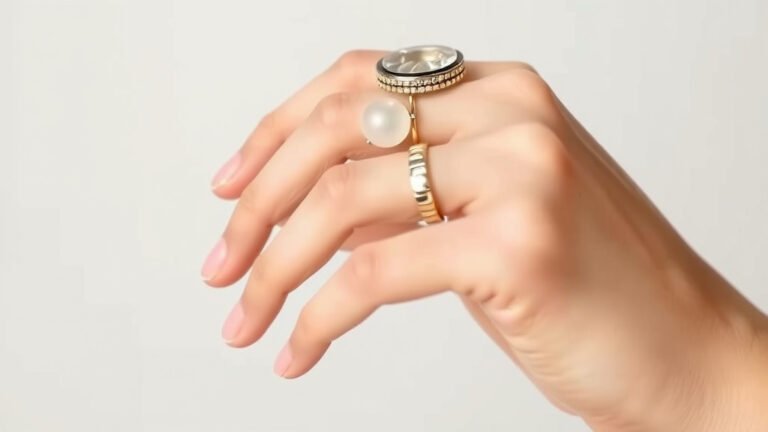
Guilloche Ring: A Timeless Jewelry Design Explained
A guilloche ring is a piece of jewelry featuring an ornate, repeating pattern. This decorative technique uses machinery to engrave fine, interlaced designs. You’ll often see it on vintage rings, adding a touch of timeless elegance.
This intricate metalwork creates a beautiful, almost lace-like effect. It’s a testament to skilled craftsmanship from a bygone era. Many people are drawn to guilloche for its unique visual appeal and the historical craftsmanship it represents.
- Guilloche rings have decorative, repeating patterns.
- The designs are made using special engraving machines.
- This technique adds an elegant and vintage look.
- It’s a sign of skilled metalworking and craftsmanship.
- Guilloche is often found on antique or estate jewelry.
Let’s take a closer look at what makes these rings so special and how to spot them.
Understanding Guilloche Ring Patterns
So, you’ve seen a guilloche ring and are wondering what makes that pattern so special. Essentially, it’s a decorative engraving technique. Special machines create fine, interlaced lines. These lines repeat in a symmetrical, often geometric, design. Think of it like a highly detailed mechanical lace etched onto metal. It’s not just a simple etching; it’s a precise, machine-driven artistry.
The term “guilloche” actually refers to the pattern itself, not just the ring. This pattern can be applied to many things, like watch faces, currency, and yes, jewelry. When you see it on a ring, it adds a layer of historical craftsmanship. It’s a style that has stood the test of time.
How Is Guilloche Created?
This is where the “machinery” part comes in. Guilloche patterns are made using a rose engine lathe. This is a type of mechanical device. It uses rotating cutters. These cutters are guided by cams and linkages. This allows for extremely precise and repeatable patterns. The machine creates a series of overlapping geometric shapes. These shapes form a continuous, flowing design.
The operator of the machine must be highly skilled. They set up the cams and guide the tool. Even though a machine does the cutting, the artistry is in the setup and execution. It’s a beautiful marriage of mechanics and art. This process results in designs that are often described as mechanical lace. The precision is truly remarkable.
The Rose Engine Lathe Explained
Imagine a very sophisticated pottery wheel, but for metal, and instead of shaping clay, it’s engraving. That’s a bit like a rose engine lathe. It spins the metal workpiece. A cutting tool moves across the surface. The movement of the tool is controlled by complex mechanisms. These mechanisms are called cams. They dictate the curves and lines of the pattern. The result is a pattern with an amazing level of detail.
Different combinations of cams and settings produce different guilloche patterns. Some look like waves, others like starbursts, and many are a complex mix of lines and curves. It’s this variety that makes each piece potentially unique, even though the technique is machine-assisted.
Common Guilloche Patterns You Might See
Guilloche patterns aren’t all the same. You’ll find a variety of styles. Some are very simple and linear. Others are incredibly elaborate and cover the entire surface of the ring. We found that certain patterns are more common on rings.
- Wavy Lines: These are often parallel lines that undulate. They can create a flowing, water-like effect.
- Geometric Shapes: Overlapping circles, squares, or diamond shapes are common. They fit together like a puzzle.
- Fan or Sunburst Patterns: Lines radiate outwards from a central point. This gives a dynamic look.
- Basketweave: Patterns that mimic the look of woven material. They have a textured appearance.
- Chevrons: V-shaped patterns arranged in rows. They can be simple or layered.
The beauty of guilloche is its adaptability. Jewelers could choose patterns that fit the style of the ring. They could also match patterns to other decorative elements, like gemstones.
Why Are Guilloche Rings So Appealing?
There are several reasons why guilloche rings capture our attention. It’s more than just a pretty pattern. It speaks to a specific era of jewelry making.
A Touch of Vintage Elegance
Guilloche patterns were most popular in the late 19th and early 20th centuries. This was during the Art Nouveau and Art Deco periods. Jewelry from this time often features this technique. Wearing a guilloche ring connects you to that historical charm. It offers a sophisticated look that doesn’t go out of style.
Many people are drawn to vintage jewelry. They appreciate the craftsmanship. They enjoy owning a piece with a story. A guilloche ring often fits this desire perfectly. It’s a subtle nod to the past. It adds a unique character to your personal style.
The Skill of the Engraver
Even with machines, the creation of guilloche requires immense skill. The engraver must understand the mechanics. They need to select the right tools and settings. They also need an artistic eye. This is especially true when combining guilloche with other design elements. Many experts say the precision of the engraving is a key indicator of quality (GIA). This technique highlights a dedication to detail and precision.
Think about the tools available then. No CAD software or laser engraving. It was all done with mechanical precision. This makes the intricate patterns even more impressive. It’s a testament to human ingenuity and skill. It makes the ring feel more special and personal.
Durability and Wearability
Beyond aesthetics, guilloche patterns are surprisingly durable. Because they are engraved into the metal, they tend to last. They don’t wear down as easily as surface ornamentation. This makes them ideal for everyday wear. A well-made guilloche ring can look beautiful for generations.
Of course, like any ring, care is still important. But the engraved nature of the pattern helps it resist damage. It won’t easily chip or peel off. This practicality is a big part of their appeal for many wearers. You get beauty with longevity.
How to Spot a Guilloche Ring
When you’re looking at rings, especially vintage or estate pieces, how can you tell if it has that special guilloche pattern? Here are a few things to look for.
Examine the Metal Surface Closely
Get a good look at the metal band or any decorative areas. Do you see a repeating, symmetrical pattern? Are the lines fine and interlaced? Often, the pattern covers a large area. It might be on the sides of the band, the gallery (the part under the main stone), or even the entire surface. Look for that mechanical, lace-like quality.
Sometimes, the pattern might be subtle. A magnifying glass or jeweler’s loupe can help. You’ll see the precise, repeating lines that are characteristic of guilloche. It won’t look hand-etched in the typical sense. It will have a manufactured perfection to it.
Consider the Era of the Ring
As we mentioned, guilloche was very popular in the early 1900s. If you’re looking at a ring from, say, 1910-1940, there’s a good chance it might feature this engraving. While it can appear in other eras, this was its heyday. Jewelry designers of that time loved its ability to add rich detail and visual interest.
Check for other stylistic clues from that period. Art Nouveau rings might have flowing, organic guilloche. Art Deco pieces might feature more geometric, linear guilloche patterns. Knowing the typical styles of different jewelry eras can help you identify it.
Look for Smoothness and Precision
What sets guilloche apart is its smooth, precise execution. Even though it’s an engraved pattern, it often feels very smooth to the touch. The lines are crisp and clean. There are no rough edges or imperfections that you might find in hand-engraving. This smooth, mechanical perfection is a strong indicator.
Compare it in your mind to other engraved jewelry. You’ll notice the difference. The consistent depth and width of the lines are key. It’s this level of detail that makes guilloche so captivating.
Check for Maker’s Marks or Hallmarks
Sometimes, the ring might have a maker’s mark. This could indicate the original manufacturer. If you can research that maker, you might find they were known for using specific engraving techniques. While not always present, hallmarks can offer clues about the ring’s age and origin. They add another layer to understanding your jewelry. They are a mark of quality and authenticity.
Remember, a lack of a mark doesn’t mean it’s not guilloche. Many older pieces don’t have clear markings. Use the pattern itself as your primary guide. The visual evidence is often the most telling.
Guilloche Ring Checklist:
- Look for repeating, interlaced patterns.
- Check for a fine, almost lace-like texture.
- Examine the smoothness and precision of the lines.
- Consider the ring’s likely era (early 1900s is common).
- See if the pattern covers a significant area of the metal.
- Use a magnifying glass for finer details.
Conclusion
You’ve learned that a guilloche ring is more than just beautiful jewelry; it’s a piece of history. These rings feature mesmerizing, repeating patterns created by skilled artisans using specialized machinery like the rose engine lathe. This technique produces a look of delicate, mechanical lace that adds a unique vintage elegance. They offer a wonderful blend of artistry and durability, making them perfect for anyone who appreciates timeless craftsmanship. Now that you know what to look for, you can confidently identify these captivating pieces and perhaps even add one to your collection!
Frequently Asked Questions
Are guilloche rings valuable?
The value of a guilloche ring can vary greatly. Factors like the precious metals used, the presence of gemstones, and the overall condition play a big role. However, the unique craftsmanship and historical appeal of the guilloche pattern itself often contribute to a ring’s desirability and price among collectors.
Can guilloche patterns be repaired?
Repairing guilloche patterns can be challenging due to their precise, machine-engraved nature. Minor wear might be polished out, but significant damage often requires specialized expertise. Some jewelers may be able to re-engrave or restore parts of the pattern, but it’s a delicate process.
Where can I find guilloche rings today?
You’ll most commonly find guilloche rings in antique shops, estate jewelry stores, and online marketplaces specializing in vintage or pre-owned items. Keep an eye out for estate sales or auctions, as these can be excellent places to discover unique guilloche pieces.
Is guilloche the same as engraving?
While guilloche is a form of engraving, it’s a very specific type. Standard engraving is often done by hand and can vary in style. Guilloche, on the other hand, relies on precise mechanical lathes to create repeating, geometric patterns with exceptional accuracy and uniformity.
What metal are guilloche rings typically made from?
Guilloche rings were historically made from various precious metals, with gold and silver being very common. You might also find them in platinum, especially in higher-end pieces. The metal choice often depended on the era and the intended market for the ring.