
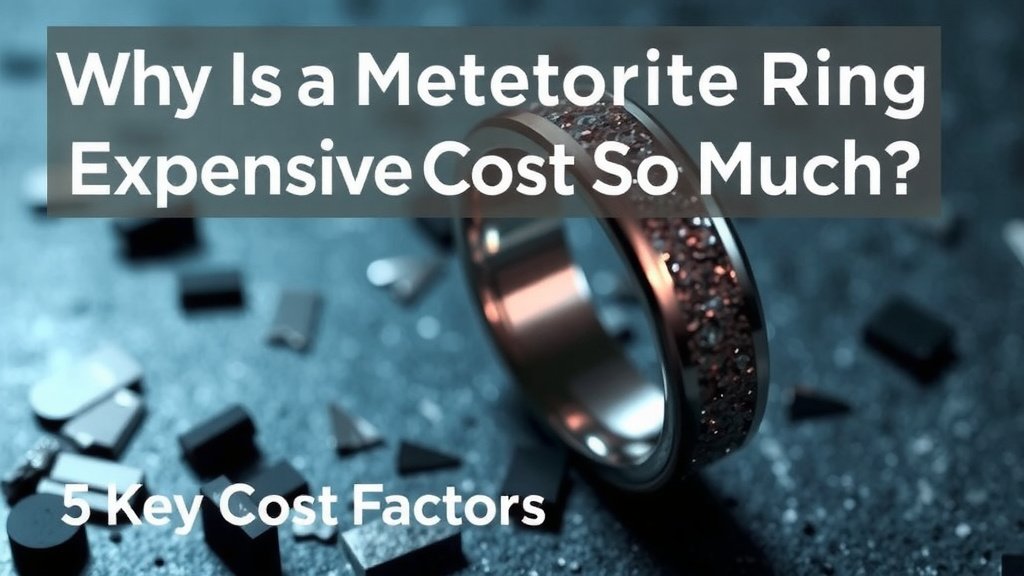
Why Is a Meteorite Ring Expensive? 5 Key Cost Factors
A meteorite ring is expensive because the raw material is rare, hard to source, and tricky to work with. Most rings use fragments from iron meteorites that crashed to Earth thousands of years ago, and only a small number of jewelers know how to cut and shape them without ruining the metal. When you add the special etched crystal patterns that can’t be faked, you get a price tag that often starts around $500 and climbs fast.
But rarity is only part of the story. We looked into how these rings are made and found that cutting and etching meteorite takes days of careful work. The metal contains nickel, which fights against standard jewelry tools, and a single wrong move can crack the whole piece. Many experts say that’s why fewer jewelers offer them, and why demand keeps prices high.
Here’s the short version:
- Rare material: Real meteorites are hard to find and legally sourced.
- Skilled labor: Cutting and etching takes special tools and lots of time.
- One-of-a-kind patterns: The Widmanstätten crystal lines can’t be reproduced on Earth.
- Risk of waste: Meteorite metal can crack during crafting, so some pieces never make it.
- Limited makers: Few jewelers work with it, which keeps competition (and prices) up.
Below, we break down everything you need to know about why meteorite rings cost what they do — from sourcing to crafting to what you should pay. Let’s dig in.
What Makes Meteorite Rings Cost So Much?
The short answer: you’re paying for a 4.5-billion-year-old material plus the hands that know how to shape it. Think of it like buying a diamond — the stone matters, but so does the cutting. With meteorite, both the “stone” and the cutting are rare.
We found that most of the price comes down to three things: where the metal comes from, how long it takes to work with, and how many people can actually do the work. Let’s walk through each one.
Where Does Meteorite Jewelry Metal Actually Come From?
Almost all meteorite rings use iron meteorites found in a handful of places around the globe. The most popular source is the Gibeon meteorite, which scattered across Namibia in Africa. Others come from the Muonionalusta field in Sweden or impact sites in the American Southwest.
Here’s the catch — supply is frozen. No new Gibeon material is being exported, since Namibia restricts its removal. That means jewelers are working from existing stock that keeps shrinking. And when supply shrinks while demand grows, prices climb. Basic economics, but with metal from space.
Why Sourcing Is Harder Than You’d Think
You can’t just order meteorite by the pound like silver. Sellers often can’t verify where a fragment was found, which means reputable jewelers pay more to get documented, traceable material. That paperwork costs money, and it ends up in your ring’s price.
There’s also a legal layer. Some countries restrict meteorite export, and dealers who ignore those rules risk losing their supply entirely. The jewelers who do it right charge more — and honestly, that’s a good thing.
The Widmanstätten Pattern: A Signature You Can’t Fake
Ever seen those crisscrossing lines on a meteorite ring and wondered what they are? That’s the Widmanstätten pattern, and it’s the reason these rings look like nothing else on Earth.
Here’s the wild part: the pattern forms over millions of years of slow cooling in space — roughly one degree per million years, according to materials researchers. No furnace on Earth can cool metal that slowly, so no lab can copy it. Fake patterns exist (acid-etched steel, mostly), but experts can spot the difference almost instantly.
When you buy a real meteorite ring, you’re paying for proof that your metal actually traveled here from space. That authenticity carries a premium, and it should.
How the Pattern Gets Revealed
The pattern hides inside the metal until a jeweler slices it and treats it with acid. This process, called etching, dissolves the surface slightly so the crystal lines pop. Doing it well takes practice — etch too long and the lines blur, too short and they barely show.
Many experts say it can take several attempts to get one clean, beautiful finish. Guess who pays for the failed attempts? Eventually, all of us.
The Crafting Process: Slow, Risky, and Unforgiving
Meteorite isn’t like gold or platinum. It’s a mix of iron and nickel, and that mix behaves badly under a jeweler’s tools. The metal is brittle in some spots and tough in others, so it can crack or shatter mid-cut.
We found that experienced makers plan for waste. If a ring cracks during shaping, the material is often unusable. That risk gets priced in, the same way a contractor charges more for a tricky job.
Why Nickel Makes Everything Harder
That nickel content does two annoying things. First, it makes the metal resistant to standard cutting and polishing, so jewelers need special bits and slower speeds. Second, it reacts with skin for some wearers — more on that in a bit.
Working slowly with special tools means more hours per ring. More hours means more labor cost. It adds up fast.
A Quick Note on Allergies
Because meteorite contains nickel, some people with nickel sensitivity get skin irritation. The Mayo Clinic notes nickel allergy is one of the most common causes of contact dermatitis. Many jewelers solve this by adding a sleeve of titanium or another metal inside the band — another step, another cost. Our guide to hypoallergenic ring metals like platinum explains the options for sensitive skin.
How Much Should You Actually Pay?
Prices vary a lot depending on the maker, the band material, and the size of the meteorite piece. We found that most rings fall into these ranges:
| Ring Type | Typical Price | What You Get |
|---|---|---|
| Meteorite inlay on steel or titanium | $300 – $600 | Smaller meteorite strip, simpler finish |
| Meteorite with gold or platinum band | $800 – $2,000 | Precious metal band plus etched meteorite |
| Full meteorite band | $1,000 – $3,000+ | Solid meteorite ring, most material and labor |
| Meteorite with diamonds or gemstones | $1,500 – $5,000+ | Added stone setting on top of everything else |
Notice how adding precious metals multiplies the price? That’s because the jeweler now works with two difficult materials instead of one. Gold is soft; meteorite is brittle. Joining them takes real skill.
Hidden Costs Most People Don’t Consider
The sticker price isn’t the whole story. A few extra expenses come with owning one of these rings:
- Re-etching: The pattern can fade with wear, so some owners pay to have it re-etched every few years.
- Care products: You’ll want oil or wax to prevent rust, since iron meteorite can corrode.
- Insurance: A $1,500 ring should be added to your policy, which adds a small yearly cost.
- Sizing limits: Many meteorite bands can’t be resized, so a wrong size can mean a full replacement.
Meteorite Rings vs. Traditional Metal Rings
Comparing helps put the price in context. A plain titanium band might run $100. A tungsten ring, maybe $50. So why pay five to twenty times more for meteorite?
Because you’re not really buying a ring — you’re buying a piece of space with a story. Traditional metals are mined from Earth and refined into identical bars. Meteorite is a finite, unrepeatable material. Once the known supply is used, that’s it.
Your Pre-Purchase Checklist
Before you click “buy,” run through this quick list we put together:
- Ask for documentation confirming the meteorite’s source, like Gibeon or Muonionalusta.
- Confirm the pattern is real Widmanstätten, not laser-etched steel.
- Check the sleeve material if you have sensitive skin or a nickel allergy.
- Get the exact size right — many bands can’t be resized later.
- Ask about re-etching services and what they cost down the road.
- Compare at least three sellers so you know the fair price range.
One more tip: buy from jewelers who specialize in meteorite, not general stores that added it as a side item. Specialists tend to source better material and stand behind their work. Your future self — the one wearing a 4.5-billion-year-old rock on your finger — will thank you.
Conclusion
At the end of the day, a meteorite ring costs what it costs because you’re getting something that can’t be mass-produced. The supply of documented material is shrinking, the Widmanstätten pattern can’t be faked or recreated, and only a small circle of makers can shape this unpredictable metal without losing pieces to cracks. When you stack all of that up, the price starts to make sense — even if it stings a little at checkout. So here’s our honest advice: set your budget, stick to the checklist above, and buy from a specialist jeweler you trust. Do that, and you’ll walk away with a ring that’s genuinely one of a kind — not just a conversation piece, but a 4.5-billion-year-old piece of history on your finger. Start comparing sellers today, and don’t rush the decision.
Frequently Asked Questions
Are meteorite rings worth the money?
We think they can be, if you value uniqueness and backstory. You’re wearing material that’s older than Earth itself, and no two rings share the same pattern. If you just want a durable band on a budget, though, titanium or tungsten will serve you better.
Do meteorite rings rust or tarnish over time?
They can. Because the metal contains iron, exposure to moisture can cause surface rust if you neglect it. A light coating of oil or wax every few months usually keeps it protected, and the pattern can be re-etched if it ever dulls.
Can I wear a meteorite ring every day?
Yes, most people do, but some care is required. The metal is harder than gold yet more brittle, so hard impacts can crack it. Take it off for heavy lifting, gym sessions, or swimming, and it should hold up well for years.
Why are Gibeon meteorite rings more expensive than others?
Gibeon material is no longer exported from Namibia, so jewelers are working from a finite stock that keeps shrinking. That scarcity drives prices up compared to sources with more available supply. If you see a cheap “Gibeon” ring, be skeptical and ask for documentation.
Do meteorite rings hold their resale value?
Somewhat, but don’t count on it as an investment. Well-documented pieces from known jewelers tend to retain value better than mass-market versions. Like most jewelry, expect the resale price to be lower than what you originally paid.