Measure Ring Size At Home: A Simple Guide
You can easily measure your ring size at home using common household items like a ruler and a strip of paper or string. Knowing your exact ring size prevents the frustration of buying a ring that doesn’t fit. This simple process ensures your new bling sits perfectly on your finger, making the whole experience much more enjoyable.
Getting the right fit is more important than you might think. A ring that’s too tight can be uncomfortable, while one too loose risks a heartbreaking fall. We found that measuring at home accurately is surprisingly simple and can save you a trip to the jeweler. Plus, who doesn’t love a good DIY project that saves money?
- Use a ruler and paper/string.
- Wrap it around your finger.
- Mark where it overlaps.
- Measure the length against a ruler.
- Consult a ring size chart.
Let’s walk through the best ways to get your accurate ring size from the comfort of your own home, step by step.
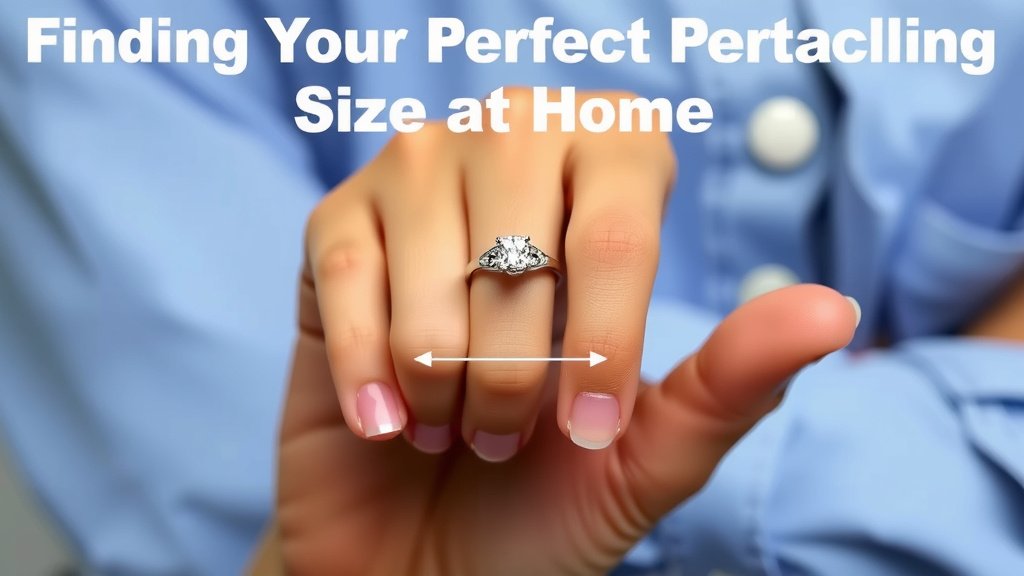
“`htmlFinding Your Perfect Ring Size at Home
Getting your ring size right is key. It ensures your ring feels comfortable and secure. You don’t want it slipping off, or worse, feeling like a tiny vise! Thankfully, you can get a surprisingly accurate measurement with tools you likely already have. We’ve found that a few simple methods work best for most people.
Method 1: The Paper Strip or String Technique
This is probably the most common and easiest way to measure. It requires just a few household items. Think of it like wrapping a tiny present for your finger!
What You’ll Need
- A thin strip of paper (about 1/4 inch wide and 4 inches long) or a piece of string.
- A pen or pencil.
- A ruler with millimeter (mm) markings.
Step-by-Step Measurement
First, decide which finger you’ll be sizing. It’s important to remember that fingers can differ slightly in size. Your dominant hand’s finger is often a bit larger. So, measure the finger you plan to wear the ring on.
Wrapping Your Finger
Take your strip of paper or string and wrap it around the base of your chosen finger. Make sure it’s snug but not too tight. You want it to feel like a ring would feel when worn. It should be able to slide over your knuckle, so don’t wrap it so tight that you can’t get it over the widest part of your knuckle.
Marking the Overlap
Once the paper or string is snug, use your pen or pencil to mark the exact spot where the end of the strip or string overlaps. This mark indicates the circumference of your finger.
Measuring the Length
Carefully unwrap the paper or string. Lay it flat against your ruler. Measure the distance from the end of the strip (or the starting point of the string) to the mark you made. You’ll want to measure this in millimeters (mm) for the most precise results. This measurement represents the circumference of your finger.
Using a Ring Size Chart
Now comes the translation part. You’ll need to compare your measurement to a standard ring size chart. Many jewelers and online retailers provide these charts. You’ll find a column for circumference in millimeters and a corresponding ring size. For example, a circumference of 50mm might be a size 5.5, while 55mm could be a 7.25 (these are just examples, always check a specific chart).
Important Considerations for This Method
The accuracy here depends on how snugly you wrap the paper or string. If it’s too loose, your ring will be too big. If it’s too tight, the ring will be too small. Try measuring a couple of times to ensure consistency. Also, consider the width of the ring you intend to buy. Wider bands fit more snugly, so you might need a slightly larger size for a wide band compared to a thin one. Many experts recommend adding about 0.5mm to your measurement for wider rings (about 6mm or more). This accounts for the difference in how a wide band feels compared to a thin string.
Method 2: Using an Existing Ring
If you already have a ring that fits one of your fingers perfectly, you can use it to find your size. This is a straightforward method if you have a trusty ring already on hand.
What You’ll Need
- A ring that fits the intended finger well.
- A ruler with millimeter (mm) markings.
Step-by-Step Measurement
Measuring the Diameter
Place the ring on a flat surface. Use your ruler to measure the inside diameter of the ring. Measure from one inner edge straight across to the opposite inner edge. Be sure to measure across the widest part of the ring’s inner circle.
Calculating the Circumference
You’ll need the circumference for most ring size charts. You can calculate this using a simple formula: Circumference = Diameter × π (pi). Pi is approximately 3.14159. So, if your diameter measurement is 17mm, your circumference would be about 17mm * 3.14159 = 53.4mm.
Consulting a Ring Size Chart
Once you have the circumference, compare it to a ring size chart, just like in the paper strip method. You’ll find the corresponding ring size based on your calculated circumference.
A Word of Caution
Make sure the ring you use for measuring actually fits the finger you want the new ring for. If the existing ring fits a different finger, its size won’t be accurate for your target finger. Also, ensure the ring isn’t misshapen or bent. A slightly bent ring can give you a false diameter reading.
Tips for the Most Accurate Home Measurement
Getting the size right involves a few key details. We found that paying attention to these small points makes a big difference.
Timing is Everything
Measure your finger when it’s at its normal temperature. Fingers tend to swell slightly in heat and shrink in cold. Avoid measuring first thing in the morning or after heavy exercise, as your fingers might be swollen. We recommend measuring in the afternoon for the most consistent results.
Consider Knuckle Size
Your knuckle is often larger than the base of your finger. The paper strip or string needs to comfortably pass over your knuckle. If you struggle to get the paper or string over your knuckle during the measurement, your ring might not fit. You may need to size up to accommodate it. Think about how the ring will feel when it slides past this point.
Measure Multiple Times
For the best results, repeat your chosen measurement method at least two or three times. This helps ensure you get a consistent reading and reduces the chance of error. If you get different numbers, take the average or try to pinpoint why there was a variation.
When in Doubt, Ask a Pro
While these home methods are great, nothing beats the accuracy of a jeweler’s professional sizing tools. If you’re still unsure or are buying a very special, expensive ring, consider visiting a jeweler for a definitive reading. They can provide a professional measurement that will give you complete confidence.
Common Ring Sizing Mistakes to Avoid
Even with the best intentions, a few slip-ups can lead to an incorrect size. Here are some common pitfalls:
- Using a thick string or cord, which is harder to mark precisely.
- Wrapping the paper or string too loosely or too tightly.
- Forgetting to measure over the knuckle.
- Not accounting for ring width (wide bands need a slightly larger size).
- Measuring at an extreme temperature (very hot or very cold).
By keeping these tips in mind, you’re well on your way to finding your perfect fit. It’s a small step that makes a huge difference in how your ring looks and feels.
“`Conclusion
You’ve now learned simple, effective ways to measure your ring size at home. Using a paper strip or an existing ring can give you a surprisingly accurate measurement. Remember to consider your finger’s temperature and knuckle size for the best results. Taking a few extra moments to measure carefully can save you the hassle of returns and ensure your ring fits perfectly from day one. Your next step is to grab a ruler and paper, and get that perfect fit!
Frequently Asked Questions
How can I be sure my ring size measurement is accurate if my fingers swell?
Measure your finger in the afternoon when it’s likely at its normal temperature. Avoid measuring first thing in the morning or after exercise when fingers tend to be more swollen. Taking multiple measurements throughout the day can also give you a better average.
What if my knuckle is significantly larger than the base of my finger?
When using the paper strip method, ensure the strip can comfortably slide over your knuckle. If it’s a tight fit, you may need to size up to ensure the ring can pass over your knuckle when putting it on. This accounts for the widest part of your finger.
Does the width of the ring I want affect the size I should get?
Yes, it absolutely does. Wider bands (typically 6mm or more) tend to fit more snugly. For these, it’s often recommended to add about 0.5mm to your measurement to account for the extra surface area. This ensures a comfortable fit for thicker bands.
Can I use a piece of dental floss to measure my ring size?
While dental floss is thin, it’s not ideal for accurate measurement. It can stretch, making it hard to mark the exact overlap point precisely. A non-stretchy string or a thin strip of paper is a much better choice for consistent and reliable results.
If I’m buying a ring as a surprise gift, what’s the best way to get their size?
Borrow a ring they already wear on the correct finger and measure its inside diameter using a ruler. If that’s not possible, you can try tracing the inside of their ring onto paper or asking a close friend or family member who might know their size.