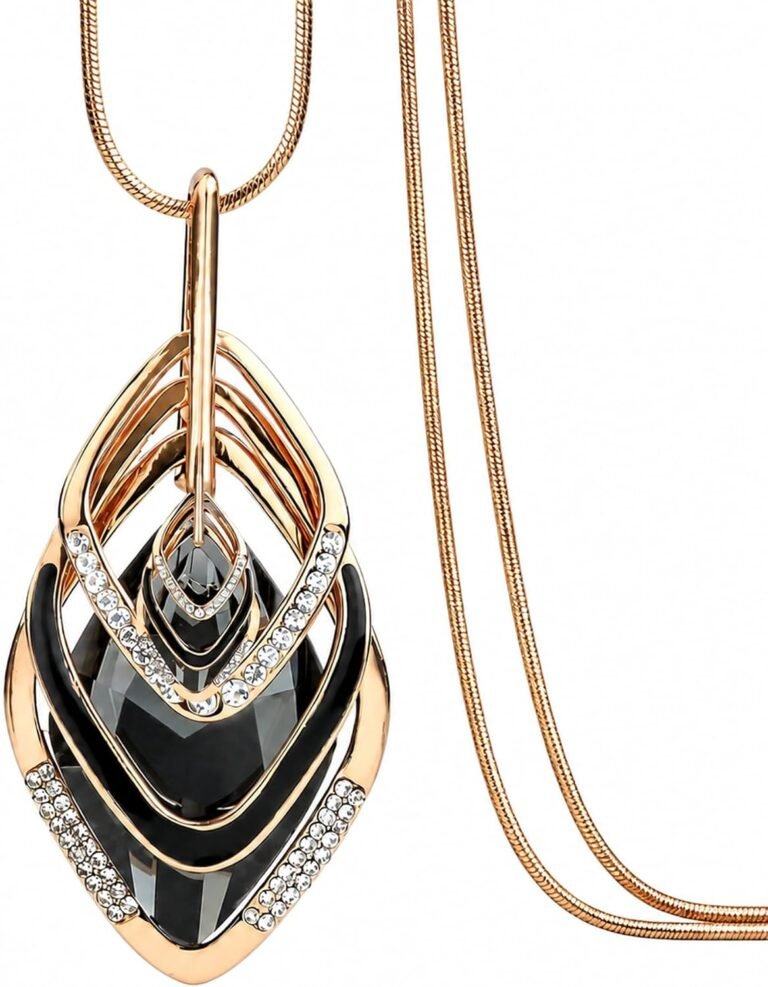
How to Stack a Pendant Necklace: Pro Styling Tips
The easiest way to stack a pendant necklace is to start with a choker or shorter chain as your base, then layer longer pieces in order of length so each pendant sits clearly without tangling. You want your focal pendant to be the star, so give it breathing room by pairing it with simpler chains that complement, not compete. We found that sticking to odd numbers (three is the sweet spot) and varying chain textures instantly gives you that effortless, styled look.
This isn’t about wearing every necklace you own at once. It’s about creating a balanced, personal composition that frames your face and fits your outfit. Mixed metals are totally fine, and you don’t need to match every chain perfectly—in fact, contrasting lengths and weights are what make a stacked look feel intentional and modern. Many experts say that length variation is the secret; if everything hangs at the same spot, you just end up with a clump of metal.
- Start with a base layer: Choose a simple choker or 16-inch chain as your anchor.
- Add a middle layer: Go with an 18-inch chain that sits just below your collarbone.
- Finish with a focal piece: Use a 20-22 inch chain for your main statement pendant.
- Limit yourself to three: Stick to odd numbers for visual balance and less clutter.
- Vary the textures: Mix a delicate cable chain with a chunky curb or a beaded strand for depth.
Below, we break down exactly how to choose your chains, space out your pendants, and mix metals like a pro, so you can confidently layer without the tangle.
Building Your Pendant Stack From the Ground Up
You want that effortless layered look without the mess. We found that getting the base right makes everything else easier. Think of your necklace stack like building a house—you need a solid foundation before you add the decor.
Start with the shortest piece you own. A choker or a 16-inch chain works perfectly here. This piece sits high on your neck and acts as your anchor. It keeps the whole stack feeling grounded and intentional, not random.
Choosing Your Anchor Chain
Your anchor should be simple. A delicate cable chain or a subtle choker with a tiny charm works best. You want this piece to disappear a bit so the attention stays on your focal pendant higher up or in the middle.
Many experts suggest picking your anchor based on your neckline. A fitted choker pairs well with off-shoulder tops. A slightly looser 16-inch chain works with crew necks and collared shirts. Match the anchor to the occasion, and you won’t go wrong.
When Your Anchor Has Its Own Pendant
If your anchor chain has a small pendant, keep it dainty. A tiny birthstone or a petite initial works well. You want it to peek out just below your jawline. This adds charm without stealing the show from your main piece further down.
We found that mixing a solid metal anchor with a beaded middle layer creates nice contrast. The textures play off each other. Your eye moves down the stack smoothly instead of getting stuck on one bulky spot.
Selecting the Middle Layer for Balance
Your middle necklace sits right around your collarbone. An 18-inch chain lands here perfectly. This piece bridges the gap between your short anchor and your longer focal necklace. It creates that cascading effect you see on fashion blogs.
This middle spot is where you can have a little fun. Add texture here. A rope chain, a figaro link, or a necklace with small spaced beads all work well. You can also add a coin pendant or a tiny locket at this length for extra personality.
Keeping the Middle Layer Tangle-Free
Tangles happen when chains are the same weight and length. Research and found that mixing chain styles reduces tangling significantly. A cable chain next to a bead strand moves differently. They don’t interlock as easily.
You can also add a small magnetic clasp extender to your middle chain. This adds a bit of length and gives you a quick release point. It makes taking the stack off at night much easier and prevents those frustrating knots.
The Role of Weight in Your Stack
Heavier chains hang lower and stay steadier. Lighter chains float and move more with your body. If you wear all heavy chains, your stack feels clunky. If you wear all light ones, it can feel flimsy and twist around.
Try pairing a medium-weight middle chain with a lightweight anchor. Then, use a heavier focal pendant on your longest chain. This creates a natural gravity that keeps everything laying flat and looking polished.
Selecting Your Focal Pendant and Longest Chain
Your focal pendant is the star of the show. This is the piece that tells your story. It deserves the longest chain, usually 20 to 22 inches. That extra length lets the pendant sit at your chest or just below, drawing the eye down gracefully.
You want this pendant to stand out. Give it breathing room. The chain it hangs on should be simpler than the pendant itself. A bold gemstone or a large coin pendant needs a smooth, unadorned chain to let its beauty shine through.
Matching Pendant Size to Chain Length
Bigger pendants look better on longer chains. A huge pendant on a short chain looks cramped and overwhelms your neckline. We found that the chain length should increase as the pendant size increases. This keeps proportions looking right.
Let’s break down a quick guide that works for most body types and styles. This chart reflects common jewelry design principles that stylists use daily.
| Chain Length | Best Pendant Size | Placement on Body |
|---|---|---|
| 16 inches | Small or dainty (under 10mm) | Sits at the base of the neck |
| 18 inches | Small to medium (10-14mm) | Rests on the collarbone |
| 20-22 inches | Medium to large (15mm and up) | Hangs at the upper chest |
| 24 inches and up | Statement or oversized | Reaches the lower chest |
This table gives you a solid starting point. You can push the boundaries once you get comfortable. Just remember that proportion is your friend when stacking.
Mixing Metals Like a Pro
Gone are the days when you had to stick to one metal tone. Mixed metals are trending and look incredibly chic when done right. Many stylists recommend pairing yellow gold with silver or rose gold for a modern, curated vibe.
You want to create a cohesive look, not a random mess. Choose one dominant metal for your focal piece. Then, let your other chains support that choice. If your focal pendant is gold, make at least one of your other chains gold too. This creates a visual connection.
A Simple Rule for Mixing Tones
Here is a simple trick: think in ratios. Use two parts of your dominant metal and one part of the accent metal. So, two gold chains and one silver chain. Or two silver chains and one rose gold piece. This keeps the stack from looking chaotic.
We found that texture also helps unify mixed metals. A matte gold chain pairs beautifully with a shiny silver chain. The different finishes give your eye something interesting to look at. They make the mismatched colors feel deliberate and stylish.
Using Pendant Spacing to Prevent Tangles
Spacing is everything in a pendant stack. We found that tangling is usually a spacing problem, not a jewelry quality problem. When your chains are roughly the same length, they tangle. Varying the lengths by at least one to two inches is your solution.
Aim for a visible gap between each pendant. You want to see the chain between the charms. This not only prevents knots but also makes your stack look cleaner and more intentional. Each piece gets its own moment to shine.
Testing Your Chain Drop Before Wearing
Here is a quick test you can do at home. Hold your necklace stack at the clasp and let it dangle in front of you. Are the pendants bunched together? That is a sign you need more length difference. Adjust your chains before putting them on.
Another trick is to add a small silicone ring to the clasp area. You can find these at craft stores. It creates friction and helps separate the chains at the back of your neck. This small addition works wonders for keeping everything in place.
Your Pendant Stacking Checklist
Let’s nail down the process with a simple checklist. This will guide you every time you want to create a stacked look without overthinking it. Keep this list handy when you are picking out your jewelry.
- Start with your base: grab a 16-inch chain or choker.
- Choose your middle: add an 18-inch chain with texture.
- Select your star: pick a 20 to 22-inch chain with your main pendant.
- Count your pieces: stick to five or fewer total necklaces for balance.
- Mix it up: use at least two different metal tones or chain textures.
- Do a wiggle test: move around in the mirror to check for tangles.
Run through this checklist quickly. You should feel confident as you grab your necklaces. The process becomes faster and more intuitive each time you do it.
Adjusting Your Stack for Your Outfit
Your necklace stack needs to work with your neckline, not against it. A high crew neck calls for a longer stack. Think 18 inches and below, so the pendants sit on your sweater. A deep V-neck or a scoop neck allows for a shorter, higher stack.
You also want to consider the busyness of your outfit. A printed blouse pairs best with a simpler stack. A solid black top can handle a more elaborate, mixed-metal arrangement. Let your clothing set the tone for your jewelry choices.
The Carefree Vibe of a Casual Stack
Casual outfits beg for relaxed stacking. Throw on a t-shirt and jeans, and layer a simple gold chain with a leather cord. That contrast feels effortless and put-together. You look like you didn’t try too hard, which is exactly the goal.
Many jewelry lovers swear by this trick for daily wear. It keeps things comfortable and low-key. The pieces are lightweight, so you barely feel them. That is the sign of a good casual stack.
Elevating Your Look for the Office or Night Out
For the office or a dinner date, you can be a little more deliberate. Use a structured anchor like a choker with a pearl middle strand. Finish with a sleek bar pendant. This combination looks sharp and sophisticated without being distracting.
Pay attention to the metals you choose for these settings. Stick to all one color for a more formal look. Or, use your mixed-metal stack to show off your personality in a professional environment. Both work well when the chains are well-spaced.
Remember that your stack should feel like you. There are no hard rules set in stone. Research and found that personal comfort is the biggest factor in whether you actually wear your jewelry. Pick pieces that make you smile when you look in the mirror.
Conclusion
Stacking pendant necklaces is all about balance, spacing, and personal style. You now know the simple formula: start with a short anchor chain, add a textured middle layer, and finish with your statement pendant on a longer chain. Keep your lengths varied by at least an inch or two, and don’t be afraid to mix metals freely.
Remember to stick to odd numbers of necklaces, and always do a quick wiggle test before you head out the door. Your stack should feel like an extension of your outfit, not a burden. So open your jewelry box, pull out three pieces that make you happy, and layer them with confidence. You have the tools to create a look that is uniquely yours.
Frequently Asked Questions
Can you stack two pendant necklaces of the same length?
You can, but they will likely tangle and bunch together. Research and found that chains of identical length move as one unit, which causes knots. If you love two same-length pieces, use a clasp extender on one to create a slight drop difference.
What is the best way to store a pendant necklace stack so it doesn’t tangle?
Store each necklace individually in a small zip-top bag or a pill organizer. You can also thread each chain through a separate drinking straw before clasping it. This keeps the chains from intertwining while sitting in your jewelry box.
Are gold and silver necklaces supposed to match when stacked together?
No, they don’t need to match perfectly. Mixed metals create a modern, curated look that feels intentional. The trick is to use one dominant metal tone for your main pendant, then let the other chains support that choice with complementary accents.
How many necklaces is too many when stacking pendants?
Five is usually the maximum before a stack starts looking cluttered and heavy. Three is the sweet spot for most outfits and necklines. If you want to wear more, keep each chain ultra-thin and lightweight to avoid overwhelming your look.
Can you stack a pendant necklace with a pearl strand?
Absolutely, and it looks beautiful. Pearl strands add lovely texture and softness to metal chains. Pair a dainty gold chain with a shorter pearl strand, and let a longer pendant hang below. Just keep the pearls small to avoid visual weight.