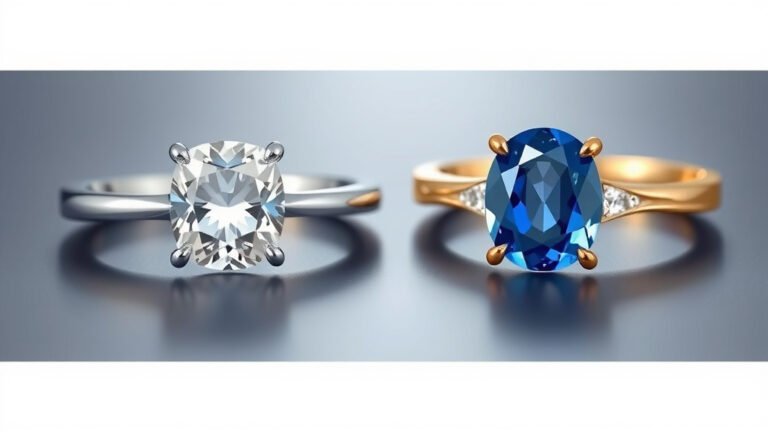

How to Find Your Ring Size Accurately at Home
Finding your correct ring size is easier than you think, and you can do it right at home. The most common ring sizes for women are 6 and 7, while for men, they are 10 and 11. Knowing your size ensures a comfortable fit and prevents losing your beautiful ring. We’ll show you exactly how to measure it accurately.
Getting the right fit is super important. A ring that’s too loose might slip off, and one that’s too tight can be uncomfortable. Many people underestimate how much their fingers can change throughout the day due to temperature and activity. We want to help you avoid any surprises when your new ring arrives.
- Measure your finger when it’s at a normal temperature.
- Use a strip of paper or string for measuring.
- Don’t measure when your hands are cold or hot.
- Wrap the paper/string snugly, but not too tight.
Let’s walk through exactly how to get that perfect measurement step by step so you can confidently pick out your next ring!
“`htmlFiguring Out Your Ring Size at Home
So, you’re ready to snag that perfect ring, but you’re a little unsure about your size? Don’t worry! Figuring out your ring size at home is totally doable. It just takes a little patience and a few common household items. We’ll walk you through the best methods so you can get a snug and comfortable fit.
The goal is to find a size that slides on easily but stays put. You don’t want it to feel like it’s going to fall off, nor do you want it to pinch your finger. Think of it like finding the right glove – it just feels right when it’s perfect.
The Best Way to Measure Your Finger
The most common and reliable DIY method involves using a piece of paper or string. This is often called the “paper strip” or “string method.” We’ve found this to be quite accurate when done carefully. It mimics how a jeweler would measure your finger.
Using a Paper Strip or String
Grab a strip of paper about 1/2 inch wide and 6 inches long, or a piece of string. You’ll use this to wrap around your finger where you plan to wear the ring. Make sure it’s a non-stretchy material for the most accurate reading.
Step-by-Step Measurement Guide
- Wrap it Up: Take the paper strip or string and wrap it around the base of your finger. Wrap it snugly, but not so tight that it cuts off circulation. Imagine you’re putting on a ring – you want it to feel secure but comfortable.
- Mark the Spot: Once the paper or string is snugly around your finger, mark the point where the end overlaps. This overlap is key to getting the right measurement.
- Measure the Length: Lay the paper strip or string flat. Measure the length from the end to the mark you made using a ruler. This measurement is the circumference of your finger in millimeters (mm).
- Convert to Ring Size: Now, you’ll need to convert this measurement into a standard US ring size. Many charts are available online to help you with this. For example, a circumference of 50mm typically corresponds to a US size 5.
A Note on Finger Swelling
Did you know your fingers can change size throughout the day? This is perfectly normal and often due to temperature and your activity level. We found that fingers tend to be slightly larger in the afternoon and evening. They can also swell a bit after exercise or when the weather is warm.
To get the most accurate reading, try to measure your finger when it’s at a normal, comfortable temperature. Avoid measuring first thing in the morning, after a workout, or when your hands are cold. Waiting until the afternoon or early evening is usually best.
Alternative Methods and Considerations
While the paper strip method is great, sometimes you might want to try something else or have additional factors to consider. Let’s look at a few other options and tips.
Using an Existing Ring
If you have a ring that already fits one of your fingers perfectly, you can use that as your guide. This is a super simple method if you have a well-fitting ring on hand. Many jewelers consider this an excellent way to get your size.
Measuring an Existing Ring
- Find the Right Ring: Select a ring that fits the finger you intend to wear the new ring on. Make sure it fits comfortably, not too tight or too loose.
- Use a Ruler: Place the ring on a flat surface. Use a ruler to measure the inner diameter of the ring in millimeters. Be precise; measure from the inside edge straight across to the opposite inside edge.
- Convert to Ring Size: Just like with the paper strip method, you’ll use a ring size chart to convert the inner diameter measurement into a US ring size. A diameter of 16.5mm, for instance, usually translates to a US size 6.
The Importance of Fit for Different Fingers
Remember that your fingers aren’t all the same size. Your dominant hand’s fingers are often slightly larger than those on your non-dominant hand. And, of course, your thumb is usually much bigger than your other fingers.
This is why it’s important to measure the specific finger you plan to wear the ring on. A size that fits your ring finger might be too tight or too loose on your middle finger. Taking the time to measure the correct finger prevents disappointment.
Considering the Width of the Ring
The width of the ring itself can also affect how it fits. Thicker or wider bands tend to feel a bit tighter than thinner bands. This is because they cover more of your finger.
If you’re ordering a wider band (say, 6mm or more), you might want to consider sizing up slightly – perhaps by a quarter or half size. We found that many people prefer a slightly looser fit for wider bands. It’s a good idea to check the jeweler’s recommendations for specific ring styles.

A Quick Reference: Ring Size Chart Example
To make things easier, here’s a quick look at how some common measurements translate to US ring sizes. Keep in mind that these are approximate, and individual sizing can vary slightly.
| Inner Diameter (mm) | Circumference (mm) | US Ring Size |
|---|---|---|
| 15.7 | 49.2 | 4 |
| 16.5 | 51.8 | 5 |
| 17.3 | 54.4 | 6 |
| 18.1 | 56.9 | 7 |
| 18.9 | 59.5 | 8 |
| 19.8 | 62.1 | 9 |
| 20.6 | 64.7 | 10 |
This chart can give you a good starting point. When in doubt, it’s often better to size up slightly, especially if you’re between sizes. A ring that’s a tiny bit too loose can sometimes be adjusted by a jeweler. A ring that’s too tight can be much harder (or impossible) to resize.
Tips for Success
Getting the right measurement is all about paying attention to the details. Here are a few final tips to ensure you get the most accurate result possible.
- Measure Twice, Order Once: Double-check your measurements before you finalize your ring size.
- Consider the Knuckle: If your knuckle is significantly larger than the base of your finger, measure both the knuckle and the base. You’ll want the ring to pass over the knuckle comfortably. Sometimes this means sizing up.
- Be Patient: Don’t rush the process. Taking your time will save you a headache later on.
- When in Doubt, Ask: If you’re really unsure, visiting a local jeweler is the safest bet. They have professional tools and expertise.
Conclusion
You’ve now learned how to accurately measure your ring size right at home! By using a simple paper strip, string, or an existing ring, you can get a measurement that works. Remember to consider factors like finger swelling due to temperature and the width of the ring itself. Taking your time and measuring the correct finger will help ensure your new ring fits perfectly. Your next step is to confidently use your measurement to select your beautiful new ring!
Frequently Asked Questions
What’s the best time of day to measure my finger for a ring?
We found that fingers tend to be slightly larger in the afternoon and early evening. It’s best to measure when your hands are at a normal, comfortable temperature. Avoid measuring right after exercising or when your hands are cold.
How do I account for my knuckle size?
If your knuckle is significantly larger than the base of your finger, you’ll need to measure both. Your ring must be able to slide comfortably over your knuckle. You may need to size up slightly to ensure this fit.
Can I use a ring that fits another finger?
Yes, you can use an existing ring if it fits the finger you intend to wear the new ring on comfortably. Just make sure it’s not too tight or too loose on that specific finger.
Does the width of the ring affect the size I should order?
Yes, wider bands tend to feel tighter than thinner bands. For rings that are 6mm or wider, we recommend considering sizing up a quarter to half size. This often leads to a more comfortable fit.
My measurement is between two sizes. What should I do?
When you’re between sizes, it’s generally safer to size up. A ring that’s a little too loose can often be adjusted by a jeweler. A ring that’s too tight can be much harder, or even impossible, to resize larger.