Which Finger for Engagement Ring: Tradition and Meaning
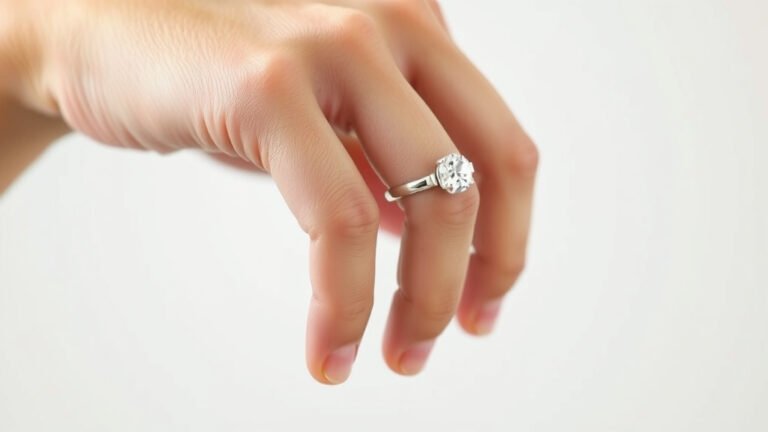
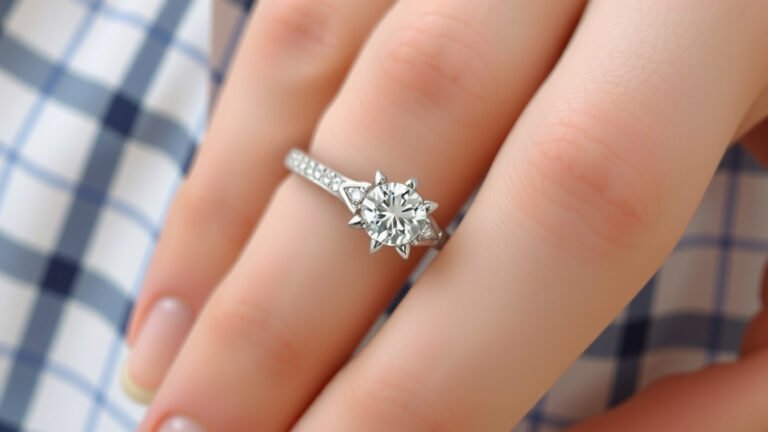
The traditional finger This article explains what an engagement ring is and its symbolism. for an engagement ring is your left ring finger. This custom dates back centuries and is still widely followed in the United States and many other Western cultures.
While the left ring finger is the most common choice, it’s not the only option. Some couples choose the right hand for various personal or cultural reasons. Understanding these traditions can help you and your partner make the best decision for your engagement ring placement.
- Engagement rings are traditionally worn on the left ring finger.
- This custom has historical roots, often linked to the belief in a vein connecting this finger to the heart.
- Some couples opt for the right ring finger due to personal preference or cultural background.
- Ultimately, the finger you choose is a personal decision between you and your partner.
Let’s dive into the history and different traditions surrounding engagement ring placement, so you can feel confident about where your special ring will sit.
Where Does an Engagement Ring Go? Understanding the Tradition
So, you’re wondering about the perfect finger for your engagement ring? You’ve probably seen it a lot: the left ring finger. This is the most common place for an engagement ring in the United States and many Western cultures. It’s a tradition that goes way back.
The “Vena Amoris” and Its Heart Connection
Where did this left-hand tradition come from? It’s often traced back to ancient Roman beliefs. They thought there was a special vein, called the “Vena Amoris,” which translates to “vein of love.” This vein was believed to run directly from the fourth finger on the left hand straight to the heart. Wearing the ring on this finger was seen as a direct symbol of love being connected to your heart. Pretty romantic, right?
While modern anatomy tells us all our fingers have similar veins, the idea stuck. Many cultures have embraced this symbolism, making the left ring finger the go-to choice for centuries. It’s a lovely thought, even if it’s not scientifically proven. It adds a layer of sentiment to the ring.
Why the Left Hand? Exploring the Symbolism
The left side of the body is also often associated with the heart. For most people, their heart is on the left side of their chest. So, placing the ring on the left hand, specifically the ring finger, reinforces that connection. It’s like keeping your love close to your heart, literally. This symbolism is why the tradition has lasted so long.
Even as traditions evolve, this one remains strong. It’s a silent signal to others that you’re engaged. Think of it as a subtle, beautiful announcement. It’s a shared language of love that many people understand.
The Right Hand: A Different Path for Your Ring
But what if the left hand doesn’t feel quite right for you? You might be surprised to learn that the right ring finger is also a popular choice for engagement rings. This isn’t a new trend; it has its own history and reasons behind it.
Cultural Variations and Engagement Ring Placement
Different cultures have different customs regarding engagement rings. In some European countries, like Germany, Russia, and Poland, it’s traditional to wear the engagement ring on the right hand. This is often because the left hand is traditionally associated with mourning or bad luck in these regions.
In other cultures, the right hand might simply be preferred for practical reasons. Perhaps someone is left-handed and finds wearing a ring on their dominant hand less comfortable. Or maybe it just feels more natural for them. It’s important to remember that these traditions vary widely.
Personal Preferences and Modern Choices
Beyond cultural norms, personal preference plays a huge role. Some couples simply prefer the look or feel of the ring on their right hand. Maybe the ring fits better on that finger. Or perhaps there’s a family heirloom that has always been worn on the right. These are all valid reasons.
Today, many couples are choosing what feels best for them, regardless of tradition. The most important thing is that you and your partner are happy with the decision. It’s your symbol of love, so make it yours!
Making Your Choice: What’s Best for You?
Deciding where your engagement ring will live is a conversation between you and your partner. There’s no single “correct” answer, and that’s the beauty of it. What matters most is that the ring symbolizes your commitment and love.
Discussing Ring Placement with Your Partner
Have you talked about this with your significant other? It’s a great topic to bring up during your wedding planning or even before the proposal if you’re dropping hints. Consider these questions:
- What are your family traditions?
- Are there cultural customs you want to honor?
- How does the ring feel on each finger?
- Do you plan to wear a wedding band, and how will they look together?
Open communication is key. You want to ensure you both feel comfortable and excited about the placement. It’s a decision that will impact how you wear your ring every day.
Considering Practicalities: Fit and Comfort
Let’s talk practicalities. Finger size can vary. Sometimes, a finger on one hand might be slightly smaller or larger than its counterpart on the other. You want the ring to fit snugly but comfortably. It shouldn’t slide off easily, but it also shouldn’t feel tight or cut off circulation. Understanding ring size is crucial for ensuring a comfortable fit on any finger.
Many jewelers can help you determine the best size for your finger. They might even suggest trying on rings on both hands to see where it feels most secure. Comfort is a big deal when you’re wearing a ring every day for the rest of your life!
The Wedding Band: A Future Consideration
Often, the engagement ring is worn on the left ring finger, and the wedding band is worn on the right. Or, both rings can be worn on the same finger. Some people prefer to wear their wedding band on top of their engagement ring, closest to their heart. Others like to keep them separate. It’s really a matter of personal taste and how the rings look and feel together.
We found that many couples consider how their engagement ring and wedding band will sit side-by-side. Sometimes, a wedding band is custom-designed to fit perfectly with the engagement ring. This ensures a beautiful, cohesive look on your chosen finger.
| Common Placement | Tradition/Reason | Cultural Examples |
|---|---|---|
| Left Ring Finger | Vena Amoris (vein of love) connection to the heart, Western tradition | United States, Canada, United Kingdom, Australia |
| Right Ring Finger | Varies by culture; some associate left with bad luck; personal preference | Germany, Russia, India (can vary), Norway |
This table offers a quick glance at some common placements and their reasoning. Remember, these are just common trends, not strict rules!
A Checklist for Your Ring Decision
To help you finalize your decision, here’s a quick checklist:
- Discuss with your partner.
- Consider your cultural background.
- Think about personal comfort and fit.
- Visualize how it looks with your wedding band.
- Trust your gut feeling – what feels right?
- Is the ring size consistent on both hands?
Conclusion
Choosing the right finger for your engagement ring is a deeply personal journey. You’ve learned that while the left ring finger is the traditional Western choice, rooted in romantic symbolism like the Vena Amoris, the right ring finger holds its own cultural significance and personal appeal. Ultimately, the most important thing is that you and your partner feel happy and connected to your decision. It’s about honoring your unique love story. Your next step? Have that heartfelt conversation with your partner to decide what feels most right for both of you. Make this symbol of your commitment truly yours.
Frequently Asked Questions
Can I wear my engagement ring on my right hand?
Absolutely! While many in the United States follow the tradition of wearing engagement rings on the left ring finger, several cultures, including some in Europe and India, traditionally use the right hand. It’s also a perfectly valid personal choice if it feels more comfortable or meaningful to you and your partner.
What if my left and right ring fingers are different sizes?
This is quite common, and it’s a practical reason to consider which hand the ring fits best. You want your ring to feel secure without being too tight or too loose. Your jeweler can help measure both fingers to ensure the most comfortable and secure fit for your chosen finger.
Does it matter which hand I wear my engagement ring on if I’m left-handed?
Some left-handed individuals prefer to wear their engagement ring on their right hand for comfort. They find it less disruptive to daily tasks and feel the ring is less likely to get bumped or damaged. This is a personal preference, and there’s no right or wrong answer.
What does it mean if I switch my engagement ring to my right hand after marriage?
Switching your engagement ring to your right hand after marriage is a tradition in some cultures, particularly in parts of Eastern Europe. It can also be a personal choice to keep the engagement ring with you while wearing your wedding band on the left, or simply a preference for how the rings look or feel together.
Will my wedding band go on the same finger as my engagement ring?
Typically, the wedding band is worn on the same finger as the engagement ring, often placed closer to the heart (on top of the engagement ring). However, some couples choose to wear their wedding band on the right hand and the engagement ring on the left, or even on different fingers altogether. It’s about what looks and feels best to you.