How to Spot a Fake Gold Ring: Simple Tests
Detecting a fake gold ring is easier than you might think! You can often spot fakes by looking for the hallmark stamp, checking its magnetic properties, and testing its weight and density. Real gold is a dense metal, and most fake gold will not stick to a magnet.
Many people worry about being scammed when buying gold. Fortunately, a few simple tests can help you avoid costly mistakes. We found that understanding these basic techniques gives you confidence when purchasing or even just inspecting your jewelry. It’s all about knowing what to look for!
- Look for a hallmark that indicates purity.
- Test if the ring is magnetic; gold is not.
- A magnet test can be a quick indicator.
- Consider the ring’s weight and density for authenticity.
- Be wary of prices that seem too good to be true.
Let’s walk through exactly how you can perform these tests yourself to determine if that ring is the real deal.
How to Tell if a Gold Ring Is Real
You’ve got a ring, and you’re wondering if it’s genuine gold. Don’t worry, you can often tell with a few simple checks. We’ve found that knowing what to look for gives you real confidence. Let’s get started on verifying that glimmer!
Checking the Hallmark Stamp: Your First Clue
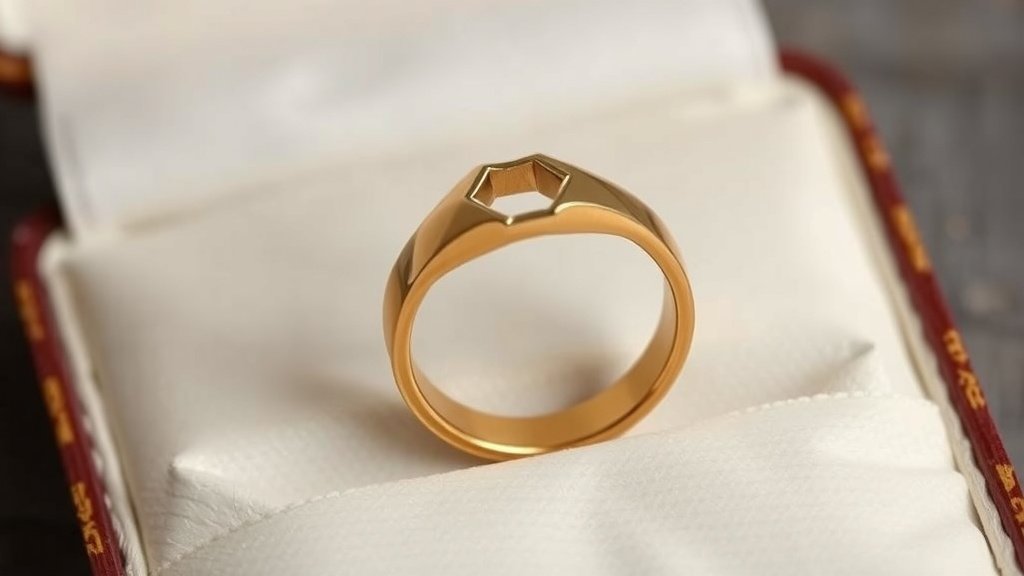
The easiest way to spot fake gold is by looking for its official stamp. Reputable jewelers always mark their gold pieces. This little stamp is a big deal. It tells you the purity of the gold used.
What to Look For on the Stamp
Real gold jewelry will have a hallmark. This usually includes a number indicating its karat. For example, you might see ’10K’, ’14K’, ’18K’, or ’24K’. Sometimes, it will be shown as a millesimal fineness. This looks like ‘417’ for 10K, ‘585’ for 14K, or ‘750’ for 18K. You’ll often find these marks on the inside of the band.
What if There’s No Stamp?
If you can’t find any stamp, it doesn’t automatically mean it’s fake. Older pieces might have worn-off stamps. However, for newer jewelry, a missing stamp is a definite red flag. We’ve found that most honest sellers will clearly display the hallmark.
Beware of Misleading Marks
Some fake gold jewelry might have stamps that look like real ones. Be careful of markings like ‘GP’ (gold plated), ‘GF’ (gold filled), or ‘RGP’ (rolled gold plate). These indicate a layer of gold over a base metal, not solid gold. Always verify the number part of the stamp.
The Magnet Test: Gold’s Lack of Attraction
Gold is not a magnetic metal. This is a simple but effective test. If your ring sticks to a magnet, it’s almost certainly not pure gold. Most fake gold rings use base metals that are magnetic.
How to Perform the Magnet Test
You’ll need a strong magnet. Refrigerator magnets might not be strong enough. A neodymium magnet is best. You can buy these online or at hardware stores. Simply hold the magnet near your ring. If it’s attracted to the magnet, you likely have a fake.
Important Considerations for the Magnet Test
There are a couple of exceptions to keep in mind. Some clasps on real gold chains might contain a steel spring. This spring is magnetic, but the rest of the jewelry is not. For rings, though, this test is usually very reliable. We found that a strong magnetic pull is a clear sign something is off.
Weight and Density: Does it Feel Right?
Real gold is a dense metal. This means it feels heavier than it looks. If a ring feels unusually light for its size, it might be made of a cheaper, less dense metal.
The Feel Test
Hold the ring in your hand. Does it feel substantial? Or does it feel hollow or flimsy? Compare it to another piece of jewelry you know is real gold, if possible. Your sense of touch can be a good initial indicator.
Understanding Density
Density is mass divided by volume. Gold has a high density (around 19.3 grams per cubic centimeter for pure gold). Base metals used in fakes are much less dense. For example, brass is about 8.4 g/cm³, and copper is about 8.9 g/cm³. This difference in density is why real gold feels heavier.
Water Displacement (Advanced Test)
For a more precise density check, you can use the water displacement method. This involves weighing the ring first, then measuring the volume of water it displaces. You’ll need a sensitive scale and a way to measure water volume accurately. While effective, this method is more involved than the others. We found that the hallmark and magnet tests are usually sufficient for most people.
The Ceramic Plate Test: Scratching for Truth
This test involves scratching the ring against an unglazed ceramic surface. Real gold will leave a gold streak. Fake gold will often leave a black streak.
How to Perform the Ceramic Test Safely
Find an unglazed ceramic tile or plate. You can often find these at craft stores. Gently rub the ring against the unglazed bottom of the tile. Be careful not to scratch it too hard, especially if you want to preserve its finish. Look at the color of the streak left behind.
Interpreting the Results
A bright gold streak indicates the metal is likely real gold. If you see a black or gray streak, it’s a strong sign of a fake. However, be aware that some fake gold pieces might be plated with real gold. The scratch test can reveal the base metal underneath if the plating is thin.
The Acid Test: A More Definitive Method
This is a more advanced test that jewelers often use. It involves using nitric acid to test the metal’s reaction. It can be very accurate but also requires caution and specialized kits.
What You’ll Need for the Acid Test
You can purchase gold testing kits online. These kits typically include a testing stone and several bottles of acid. Each acid is formulated to test for a specific karat of gold. Always follow the kit’s instructions precisely. Wear gloves and eye protection.
Performing the Test
You’ll rub the ring on the testing stone to leave a small metal deposit. Then, you’ll apply a drop of the appropriate acid to the streak. If the streak remains unchanged, the gold is likely pure or of the tested karat. If the streak dissolves or changes color, the ring is probably not real gold or is of a lower purity.
Safety First!
Nitric acid is corrosive. You must use this test in a well-ventilated area. Avoid contact with skin and eyes. If you’re uncomfortable with acids, stick to the simpler tests. We found that many people prefer the non-destructive methods.
The Price Tag: Does it Seem Too Good to Be True?
This is a classic rule of thumb: if the price seems unbelievably low, it probably is. Real gold has a market value. If a ring is being sold for significantly less than the current gold price, be very suspicious.
Research Current Gold Prices
Take a moment to check the current spot price of gold. You can easily find this online. Then, compare it to the price of the ring. Remember that jewelry often includes the cost of craftsmanship. But a massive discount is a major warning sign.
Consider the Seller’s Reputation
Buying from a reputable jeweler significantly reduces your risk. They have a reputation to uphold. If you’re buying from a flea market or an unknown online seller, be extra cautious. Always trust your gut feeling.
Quick Checklist for Identifying Fake Gold Rings
- Look for a hallmark stamp (e.g., 10K, 14K, 18K, 750).
- Check if the ring is magnetic (real gold is not).
- Assess the ring’s weight; it should feel substantial.
- Perform the ceramic scratch test for a gold streak.
- Question prices that are too good to be true.
- If unsure, consult a professional jeweler.
Conclusion
You now have the tools to confidently identify fake gold rings. Remember, checking the hallmark stamp, performing a magnet test, and assessing the ring’s weight are your primary defenses. We’ve found these simple steps significantly reduce your risk of being scammed. Don’t hesitate to trust your instincts if a deal seems too good to be true. For ultimate peace of mind, always consider consulting a professional jeweler with any lingering doubts about a piece’s authenticity.
Frequently Asked Questions
What if a ring has no hallmark stamp at all?
A complete lack of a hallmark on a newer ring is often a red flag. Older jewelry might have lost its stamp over time. If you can’t find a stamp, especially on a modern piece, proceed with extra caution or use the other tests.
Can I use a regular refrigerator magnet for the test?
While a strong refrigerator magnet might work, it’s not always reliable. We recommend using a powerful neodymium magnet for the best results. These stronger magnets will give you a much clearer indication of whether the metal is attracted.
Is it safe to scratch my ring on ceramic?
Yes, the ceramic test is generally safe if done gently. Use an unglazed part of a tile or plate. A light rub is enough to get a streak. Be mindful not to damage the ring’s finish if you want to keep it looking pristine.
What if the ring passes the magnet and stamp tests but still feels light?
If a ring has a proper hallmark and doesn’t attract a magnet, but still feels unusually light, it might be hollow or made with a very thin layer of gold over a dense, non-magnetic base metal. This is less common, but the weight and density feel can still be an indicator.
How accurate is the acid test compared to other methods?
The acid test is generally more accurate and definitive for determining gold purity. However, it requires specialized kits and caution due to the corrosive nature of the acids. For most personal checks, the hallmark, magnet, and weight tests are usually sufficient and non-destructive.