How to Size a Ring: Your Perfect Fit Guide
Finding the right ring size is easier than you think! You can accurately size a ring at home using simple tools like a ruler or a printable ring sizer. The key is to measure the inside circumference or diameter of a ring that already fits you well. This ensures your new ring will be comfortable and secure.
Knowing your ring size prevents the frustration of a ring that’s too tight or too loose. Whether you’re buying a gift or treating yourself, getting the size right the first time saves time and hassle. Many factors can affect finger size, like temperature and time of day, so it’s wise to measure a few times.
- Measure the inside diameter or circumference of a well-fitting ring.
- Use a printable chart or a string and ruler for home sizing.
- Consider measuring at different times of day and temperatures.
- When in doubt, it’s often better to size up slightly.
Let’s walk through exactly how to get your perfect fit, step by step.
Figuring Out Your Ring Size at Home
Getting your ring size right is essential for a comfortable fit. You don’t need a trip to the jeweler to find it. In fact, many people find their size accurately at home. The easiest method involves using a ring you already own and love.
Method 1: Sizing with an Existing Ring
Do you have a ring that fits perfectly on the finger you want to wear the new ring on? Great! This is your best reference point. You’ll be measuring the inside of that ring. This is often more accurate than measuring your finger directly.
Measuring the Inside Diameter
Grab a ruler that has millimeter markings. Place the ring flat on the ruler. Measure across the widest inside point of the ring. Make sure you’re measuring the inner edge, not the outer edge. Try to get the measurement as precise as possible.
For example, if the inside diameter measures 17 millimeters, write that down. This number is your starting point. Most ring size charts use diameter measurements. This is a quick and reliable way to get a size.
Measuring the Inside Circumference
If measuring the diameter feels tricky, you can measure the circumference instead. This is the distance all the way around the inside of the ring. You can use a flexible measuring tape for this. Alternatively, you can use a piece of string and then measure the string with a ruler.
Wrap the string around the inside edge of the ring. Mark where the string overlaps. Then, lay the string flat and measure from the end to your mark. This measurement is the inside circumference. Again, make sure to use millimeter markings for accuracy.
Method 2: Sizing with String or Paper and a Ruler
What if you don’t have a ring that fits the desired finger? No worries! You can still size your finger at home. This method uses simple tools you likely have on hand: a piece of string or a thin strip of paper, and a ruler.
Preparing Your Sizing Tool
Cut a strip of paper about 1/4 inch wide and a few inches long. Or, use a piece of string. You want something flexible that won’t stretch.
Wrapping Your Finger
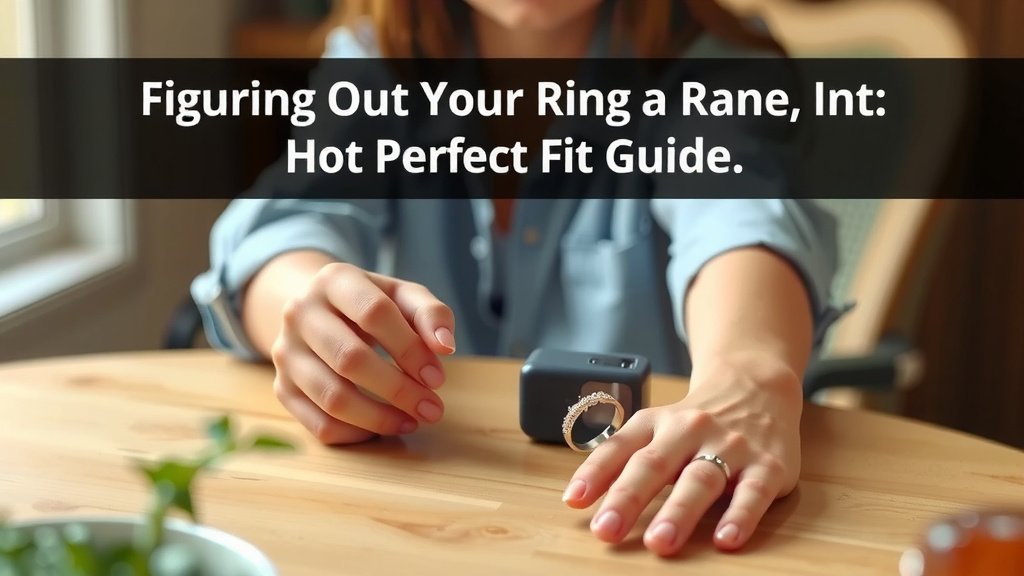
Wrap the string or paper strip around the base of the correct finger. Make sure it’s snug but not too tight. It should feel like a ring would feel. Don’t pull it so hard that it cuts off circulation. You should still be able to slide it up and down slightly.
Mark the point where the string or paper overlaps. This marks the circumference of your finger at that spot. If you’re using a pen, make a clear mark. If using string, you can cut it at the overlap point.
Measuring the Circumference
Now, take your ruler. If you used string, lay it flat and measure the length from the end to your mark. If you used paper, measure the length where the overlap occurs.
This measurement is the circumference of your finger. Record this number in millimeters. Remember, your finger size can change slightly throughout the day. We’ll discuss this more later.
Using a Ring Sizer Chart
Once you have your measurement (either diameter or circumference from an existing ring, or finger circumference), you need to compare it to a standard ring size chart. You can easily find these online.
Look for a chart that lists diameter or circumference in millimeters and converts it to ring sizes. These charts are usually quite clear. Simply find your measurement and see what ring size corresponds to it. Be sure you’re using a chart specific to your region (e.g., US, UK, Europe), as sizes can vary.
| Inside Diameter (mm) | US Ring Size |
|---|---|
| 15.7 | 3.5 |
| 16.5 | 5 |
| 17.3 | 6.5 |
| 18.1 | 8 |
| 18.9 | 9.5 |
| 19.8 | 11 |
Note: This table is for illustrative purposes. Always refer to a full, up-to-date ring size chart for the most accurate conversions.
Factors That Affect Finger Size
Your finger size isn’t static! It can change due to a few common factors. Being aware of these helps you get the most accurate reading. Think of your finger like a sponge that can absorb or release water.
Temperature and Time of Day
Many experts suggest measuring your finger at different times. Fingers tend to swell in hot weather or later in the day. They can also shrink in cold weather or in the morning. Try to measure when your hands are at a normal, comfortable temperature.
If you’re measuring in a very cold room, your fingers might be smaller. If you just did a workout or are in a hot environment, they might be larger. For the most reliable size, measure a few times throughout the day and when your body temperature is stable.
Body Weight and Hormonal Changes
We found that changes in body weight can also affect finger size. Weight fluctuations can cause fingers to become slightly larger or smaller. Similarly, hormonal changes, like those during pregnancy, can cause temporary swelling.
If you’re experiencing significant body changes, it’s wise to wait a bit for your size to stabilize before committing to a ring purchase. This helps ensure your ring will fit comfortably long-term.
Tips for the Best Fit
Here are a few extra pointers to help you nail your ring size. We want your new ring to feel like it was made just for you!
- Measure multiple times: Don’t rely on a single measurement. Take readings at different times.
- Consider the ring width: Wider bands tend to fit more snugly. You might need to size up a quarter or half size for very wide bands.
- Measure the correct finger: Your ring finger on your left hand is likely a different size than your right hand’s.
- Check knuckle size: If your knuckle is significantly larger than the base of your finger, the ring needs to pass over it.
- When in doubt, size up: It’s generally easier to resize a ring down than up.
A Quick Checklist for Sizing Success
Ready to find your size? Keep this quick checklist handy:
- Gather your tools: ruler, string/paper, existing ring (optional).
- Measure the inside diameter or circumference of a well-fitting ring.
- Or, wrap string/paper snugly around your finger at the base.
- Mark the overlap and measure accurately in millimeters.
- Compare your measurement to a reliable ring size chart.
- Measure at different times of day for best results.
Conclusion
You’ve learned how to confidently size a ring right at home! Remember, accuracy comes from using a well-fitting ring’s inside measurements or carefully measuring your finger. Factors like temperature and time of day can influence your size, so take a few readings for the best result. Don’t forget to consider band width and your knuckle size. Now you’re equipped to find that perfect fit for yourself or a loved one. Your next step is to grab a ruler and a piece of string, and try out one of these simple methods!
Frequently Asked Questions
What’s the most accurate way to measure my ring size at home?
The most accurate home method is usually measuring the inside diameter or circumference of a ring that already fits the correct finger. This bypasses potential errors from measuring your actual finger, which can fluctuate more.
My fingers swell in the heat. How do I get a reliable size?
To account for swelling, measure your finger at different times of the day. Try measuring in the morning, afternoon, and evening. Also, measure when your hands are at a normal body temperature, avoiding extremes like immediately after exercise or being in a very cold environment.
What if I don’t have a ring that fits the finger I want to size?
If you don’t have a reference ring, you can use a thin strip of paper or string. Wrap it snugly but comfortably around the base of the finger, mark the overlap, and then measure that length with a ruler in millimeters. You’ll then compare this circumference to a ring size chart.
Do I need to size up if I’m buying a wide band ring?
Yes, it’s often recommended to size up a quarter to half a size for wider band rings (typically 6mm or more). Wider bands cover more of your finger and can feel tighter, so a slightly larger size ensures comfort.
How do I measure someone else’s ring size if it’s a surprise?
If it’s a surprise, try to borrow a ring they already wear on the correct finger and measure its inside diameter. You can also discreetly trace the inside of their ring or use a ring sizing app with their phone. If all else fails, estimate based on their height and build, and remember that most rings can be resized later.