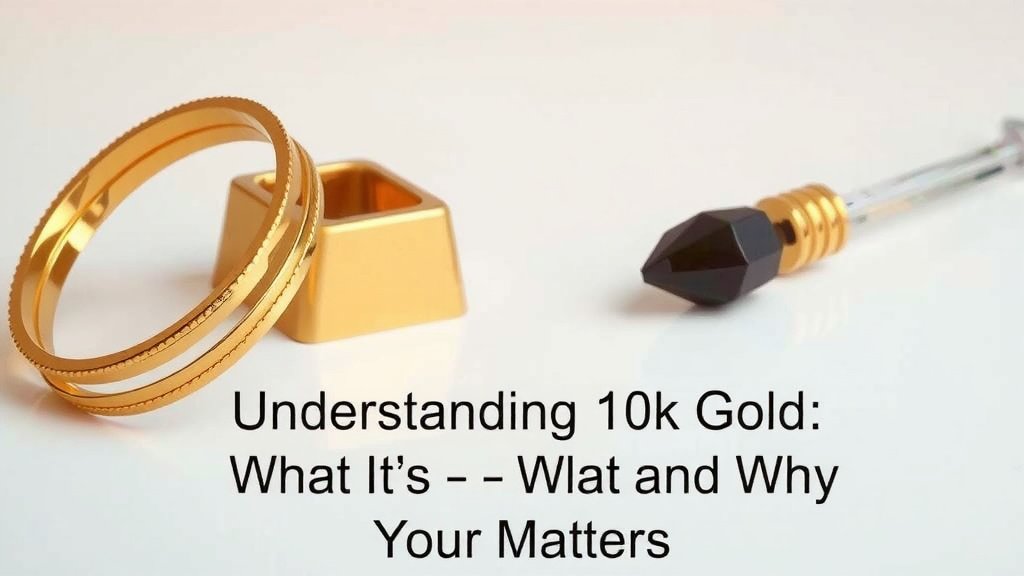
Understanding 10k Gold: What It Is and Why It Matters
10k gold is an alloy made of 41.7% pure gold. The remaining percentage is made up of other metals like zinc, copper, and nickel. This makes 10k gold more durable than higher karat gold. It’s a popular choice for everyday jewelry due to its affordability and toughness.
When you see the “10k” stamp, it tells you about the gold’s purity. Higher karats mean more pure gold, but they can also be softer and more prone to scratching. 10k gold offers a good balance between gold content and the practical benefits of added metals, making it a smart buy for many.
- 10k gold is 41.7% pure gold.
- The rest is made of other metals for durability.
- It’s stronger and more affordable than higher karats.
- Often stamped with “10k” or “417”.
Let’s dive deeper into what makes 10k gold a common choice for your favorite pieces and why you might want to consider it for your next jewelry purchase.
You’re probably wondering about that “10k” stamp on some of your favorite jewelry. It’s a common mark, but what does it really mean for you and your gold pieces? Let’s break down the composition and benefits of 10k gold.
Understanding 10k Gold Purity and Composition
Simply put, 10k gold means that out of 24 parts, 10 are pure gold. The rest are other metals.
This translates to about 41.7% pure gold. The remaining 58.3% is a mix of other metals. These can include things like copper, silver, zinc, and nickel. These added metals aren’t just fillers; they play a vital role. They make the gold stronger and more durable for everyday wear. You’ll often see this purity marked as “10k” or “417” inside a ring or on a clasp.
What Does “Karat” Really Mean?
The “k” in 10k stands for karat. It’s a system used to measure the purity of gold. Pure gold, by definition, is 24 karats (24k). This is because it’s considered 100% pure gold, although in reality, even 24k gold might have a tiny percentage of other elements. So, when you see 10k, you know it’s less than half pure gold.
The Role of Alloy Metals
Why mix gold with other metals? It’s all about practicality. Pure gold (24k) is incredibly soft. It’s so soft that it can easily bend, scratch, or even get damaged with everyday use. Imagine wearing a 24k gold ring to do chores; it wouldn’t last long!
By adding other metals, jewelers create an alloy. This alloy has improved properties. The most significant benefit is increased durability. This makes 10k gold a fantastic choice for jewelry you want to wear often, like wedding bands or everyday necklaces.
Comparing 10k Gold to Other Gold Purity Levels
You’ll find gold jewelry in various karat ratings. Understanding these differences helps you choose the best option for your needs and budget. We’ve gathered some key points to compare.
| Karat Rating | Pure Gold Percentage | Alloy Metal Percentage | Common Uses & Characteristics |
|---|---|---|---|
| 24k | 99.9% | 0.1% | Purest gold. Very soft, prone to damage. Used for investment, coins, and some cultural artifacts. Not ideal for most jewelry. |
| 18k | 75.0% | 25.0% | Good balance of gold content and durability. Rich color. Often used for fine jewelry, engagement rings. More expensive than 10k. |
| 14k | 58.3% | 41.7% | Very popular for jewelry. Durable and more affordable than 18k. Excellent choice for active lifestyles. |
| 10k | 41.7% | 58.3% | Most affordable option. Very durable and strong. Great for everyday wear and sensitive skin (if nickel-free). May appear less rich in color. |
Cost and Affordability
One of the biggest draws of 10k gold is its price point. Because it contains less pure gold than higher karats, it’s significantly more affordable. This makes gold jewelry accessible to more people. You can get a beautiful piece without breaking the bank. It’s a smart way to enjoy the look of gold.
Durability and Everyday Wear
As we mentioned, the added metals make 10k gold tough. Research shows that the higher the alloy percentage, the harder the metal becomes (American Gem Society). This means your 10k gold jewelry is less likely to scratch or dent compared to 18k or 24k gold. It can withstand the bumps and scrapes of daily life. This makes it an excellent choice for rings, bracelets, and other items that see a lot of action.
Color Variations in 10k Gold
You might notice that 10k gold can look slightly different in color compared to higher karat golds. Because it has a lower percentage of pure gold, its color can be less intense or appear a bit paler. However, jewelers can use different alloy mixes to create various shades.
Yellow Gold
Standard 10k yellow gold often has a brighter, sometimes slightly greenish or coppery hue compared to the deep yellow of 18k or 24k. This is due to the higher proportion of copper and silver in the alloy.
White Gold
To create 10k white gold, jewelers alloy gold with white metals like nickel, palladium, or manganese. It’s then typically plated with rhodium for a bright, silvery finish. 10k white gold is a very durable and affordable option for white metal jewelry.
Rose Gold
10k rose gold achieves its beautiful pinkish hue by increasing the amount of copper in the alloy. This makes it quite durable and gives it a warm, trendy color that’s very popular. The higher copper content for rose gold can be a concern for some. 10k rose gold achieves its beautiful pinkish hue by increasing the amount of copper in the alloy. Discover the details of rose gold in our guide.
Considerations for 10k Gold Jewelry
While 10k gold offers many advantages, there are a few things to keep in mind. These will help you make an informed decision.
Potential for Allergic Reactions
The alloys used in 10k gold, particularly nickel, can cause allergic reactions in some individuals. Nickel is often used to harden the alloy and give it a white appearance. If you have sensitive skin or a known metal allergy, this is an important factor.
Many experts suggest that if you have a nickel sensitivity, looking for 10k gold that is specifically marked as nickel-free or opting for white gold alloys containing palladium instead of nickel might be a better choice (American Academy of Dermatology Association). Always check the specific composition if you have concerns.
Long-Term Color and Shine
Over time, the alloy metals in 10k gold can react with the environment or your skin. This can sometimes lead to tarnishing or a slight discoloration. Tarnish is a surface reaction that can usually be cleaned off with a jewelry polishing cloth.
For white gold, the rhodium plating can wear off over time. If this happens, the jewelry might show a duller, yellowish hue underneath. Most jewelers can re-plate your white gold jewelry to restore its bright shine. Regular cleaning and proper care can help maintain its appearance.
Investment Value
While 10k gold is genuine gold, its lower gold content means it has less intrinsic value as an investment compared to higher karat golds like 18k or 24k. The price is primarily driven by the craftsmanship and design, rather than the raw gold material. If you’re looking for jewelry as a pure investment, higher karats might be considered.
Is 10k Gold Right for You? A Quick Checklist
To help you decide if 10k gold fits your lifestyle and preferences, consider these points:
- You want affordable gold jewelry.
- You need jewelry that’s very durable for everyday wear.
- You are not concerned about the highest gold purity.
- You are not prone to nickel allergies (or will choose nickel-free options).
- You appreciate good value and practical benefits.
- You want a variety of gold colors (yellow, white, rose).
Conclusion
You’ve learned that 10k gold offers a practical and affordable way to enjoy gold jewelry. Its composition of 41.7% pure gold provides excellent durability for your daily adventures. While it has less pure gold than higher karats, its strength and lower price point make it a smart choice for many. Consider 10k gold if you want jewelry that lasts and fits your budget. Ready to find your next piece? Explore 10k gold options and see how they fit your style!
Frequently Asked Questions
Is 10k gold considered real gold?
Yes, 10k gold is considered real gold. It contains 41.7% pure gold mixed with other metals to enhance its durability. While it’s not pure gold like 24k, it is a genuine gold alloy.
Can 10k gold tarnish?
10k gold can tarnish over time. The alloy metals mixed with the gold can react with air and moisture, causing a surface discoloration. Regular cleaning with a soft cloth can help maintain its shine.
Is 10k gold good for sensitive skin?
10k gold can be problematic for sensitive skin, especially if it contains nickel. Nickel is a common alloy metal that can cause allergic reactions. If you have sensitive skin, look for 10k gold that is specifically labeled as nickel-free.
Does 10k gold look less yellow than 14k or 18k?
Yes, 10k gold often has a less intense yellow color than 14k or 18k gold. This is because it contains a lower percentage of pure gold. The color can also vary depending on the specific alloy metals used.
Is 10k gold a good investment?
10k gold is generally not considered a good investment. Its lower pure gold content means its melt value is significantly less than higher karat golds. Its primary appeal is its affordability and durability for wear, not its potential for appreciation.