What Are Diamond Inclusions and What Do They Mean
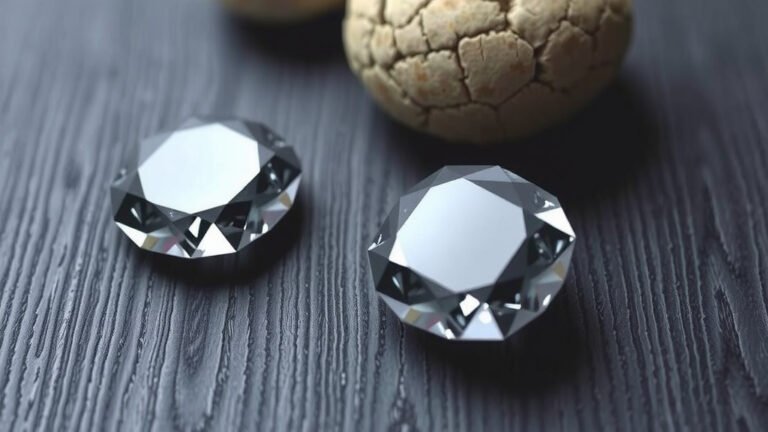
A diamond inclusion is a natural characteristic found inside a diamond. Think of them as tiny birthmarks. They are often microscopic and don’t necessarily detract from a diamond’s beauty. Most diamonds have at least one inclusion; it’s what makes each diamond unique. They are rated on a scale from Flawless to Included based on their visibility.
These internal features can be many things. They might be tiny crystals, feathers, clouds, or even small specks of carbon. The grading of a diamond’s clarity depends heavily on the size, number, and location of these internal and external flaws. Understanding inclusions helps you appreciate the diamond’s journey from the earth to your jewelry.
- Diamond inclusions are natural internal characteristics.
- They are like tiny birthmarks, making each diamond unique.
- Clarity grading depends on their size, number, and location.
- Most diamonds have inclusions, and they are not always visible.
Ready to learn more about what these internal characteristics mean for your diamond? Let’s break down the details.
Understanding Diamond Inclusions: Nature’s Fingerprints
So, what exactly are diamond inclusions? Think of them as tiny birthmarks within a diamond. They are natural characteristics formed deep within the Earth during the diamond’s creation. Most diamonds have them. These internal features are what make each diamond **truly unique**. They are a part of the diamond’s journey.
What Causes Diamond Inclusions?
Diamond inclusions form under immense pressure and heat deep inside the Earth. This process can trap other minerals or even tiny pieces of the diamond itself. We often find these as crystals, small feathers, or cloudy areas. Sometimes, they can be bits of graphite or other carbon-based materials. These are completely natural and show the diamond’s **geological history**.
Types of Diamond Inclusions
Inclusions can appear in many forms. Their appearance and composition tell a story about the diamond’s formation. Experts categorize them based on their origin and look. Understanding these types helps in grading a diamond’s clarity.
Crystals
These are perhaps the most common type of inclusion. They are essentially **tiny minerals** trapped inside the diamond. This could be another gemstone like garnet or peridot. It might even be another diamond crystal! They can look like small dots or even have their own crystal shape.
Feathers
Feathers are tiny cracks or fractures within the diamond. They often appear white or translucent. Think of them like a small, internal fissure. While they are called feathers, they don’t necessarily look like bird feathers. Their appearance is **quite varied**.
Clouds
A cloud inclusion is a group of tiny, pinpoint inclusions. They look like a hazy or milky spot within the diamond. It’s like a small fog bank. These clouds can affect the diamond’s sparkle by scattering light. Their visibility depends on their **density and size**.
Pinpoints
These are the smallest inclusions, often just tiny dots. They are so small they might look like pinpricks of light. Pinpoints can be grouped together. When they are, they can form a cloud effect. Many diamonds have these, and they are often **difficult to see** without magnification.
Other Common Inclusions
You might also find needles, which are long, thin inclusions. Then there are internal grain lines, which are growth lines within the diamond. Cavities are also possible, which are small holes or indentations inside the diamond. Each type adds to the diamond’s **individual character**.
The Clarity Grading Scale: Where Inclusions Matter
Diamond clarity is one of the famous 4 Cs. It describes the **absence of inclusions** and blemishes. The Gemological Institute of America (GIA) uses a standard scale. This scale helps buyers understand a diamond’s purity. It ranges from Flawless (FL) to Included (I3).
| Grade | Description | Inclusion Visibility |
|---|---|---|
| Flawless (FL) | No inclusions or blemishes visible under 10x magnification. | Not visible under 10x magnification. |
| Internally Flawless (IF) | No inclusions visible under 10x magnification, but minor blemishes may be present. | Not visible under 10x magnification. |
| Very, Very Slightly Included (VVS1, VVS2) | Minute inclusions, extremely difficult to see under 10x magnification. | Barely visible under 10x magnification. |
| Very Slightly Included (VS1, VS2) | Minor inclusions, difficult to see under 10x magnification. | Slightly visible under 10x magnification. |
| Slightly Included (SI1, SI2) | Noticeable inclusions under 10x magnification. | Easily visible under 10x magnification. |
| Included (I1, I2, I3) | Obvious inclusions under 10x magnification that affect transparency and brilliance. | Clearly visible under 10x magnification and often to the naked eye. |
How Inclusions Affect a Diamond’s Value
The presence, size, number, and location of inclusions all play a role in a diamond’s value. Generally, the fewer and less visible the inclusions, the **higher the diamond’s clarity grade**. And a higher clarity grade often means a higher price. However, not all inclusions are created equal. Some are much more noticeable than others.
Location Matters
An inclusion located near the center of the diamond or directly under the table facet can be more obvious. It might also weaken the diamond’s structure. Inclusions near the girdle (the edge) or on the very edge are usually less impactful. They are often hidden by the setting. This **strategic placement** can influence perceived clarity.
Size and Number
A single, tiny pinpoint inclusion is far less significant than a large feather. Similarly, a few small inclusions might be better than many. The GIA considers the overall effect of all inclusions. They look at how these features impact the diamond’s **beauty and durability**.
Are Inclusions Always Bad?
Not at all! Many experts say that nearly all natural diamonds have inclusions. It’s what makes them **authentic and natural**. For many people, a diamond with a few small, invisible inclusions is perfectly acceptable. It can also be a more budget-friendly option. You can get a larger or better-cut diamond with a lower clarity grade. You just need to look for ‘eye-clean’ diamonds.
An ‘eye-clean’ diamond means you can’t see the inclusions without a magnifying loupe. This is often the goal for many shoppers. You get the beauty and sparkle without paying a premium for a perfect clarity grade. It’s about finding the **right balance** for your preferences and budget.
What to Look for When Buying a Diamond
When you’re shopping for a diamond, think about the 4 Cs. But pay special attention to clarity. Don’t be afraid of inclusions, but be aware of them. Here’s a quick checklist to guide you:
- Know the clarity grade of the diamond.
- Ask to see the diamond under magnification (a jeweler’s loupe).
- Look for “eye-clean” diamonds if budget is a concern.
- Understand how inclusions might affect the diamond’s sparkle.
- Consider the location and type of any inclusions present.
- Choose a setting that can help hide minor inclusions, if needed.
Conclusion
You’ve learned that diamond inclusions are natural birthmarks, unique to each stone. They tell a story of your diamond’s journey from the Earth. While they affect clarity grading, they don’t always mean a diamond is less beautiful. Many inclusions are invisible to the naked eye, offering budget-friendly options for stunning rings. Focus on finding an “eye-clean” diamond. This way, you get the sparkle you desire without overpaying. Your next step is to visit a reputable jeweler. Ask to see diamonds under magnification and find the perfect balance of clarity and beauty for you.
Frequently Asked Questions
Are diamond inclusions always visible?
No, not at all. Many inclusions are microscopic. They are only visible under 10x magnification. Diamonds with inclusions invisible to the naked eye are called “eye-clean.” These can be a great choice for your budget.
Do inclusions affect a diamond’s sparkle?
Sometimes, yes. Large or dense inclusions, like clouds, can scatter light. This might reduce the diamond’s brilliance and sparkle. However, smaller or less visible inclusions often have little to no impact on sparkle. Good cut and polish are key to maximizing sparkle.
Can inclusions weaken a diamond?
Certain types of inclusions, like deep feathers or large cracks, can potentially weaken a diamond. This is especially true if they are in vulnerable spots. However, most inclusions are small and do not compromise the diamond’s durability. Your setting can also offer protection.
Are diamonds with inclusions less valuable?
Generally, diamonds with fewer and less visible inclusions are more valuable. This is because they achieve a higher clarity grade. However, the value also depends on the type and location of the inclusion. An eye-clean diamond with minor inclusions can still be very beautiful and reasonably priced.
How can I tell if a diamond has inclusions?
You can ask to see the diamond under a jeweler’s loupe, which magnifies it 10 times. A trained gemologist or jeweler will point out any inclusions. When shopping, you can also look for diamonds described as “eye-clean” if you want to avoid visible imperfections.