Understanding Your GIA Certificate: What It Means
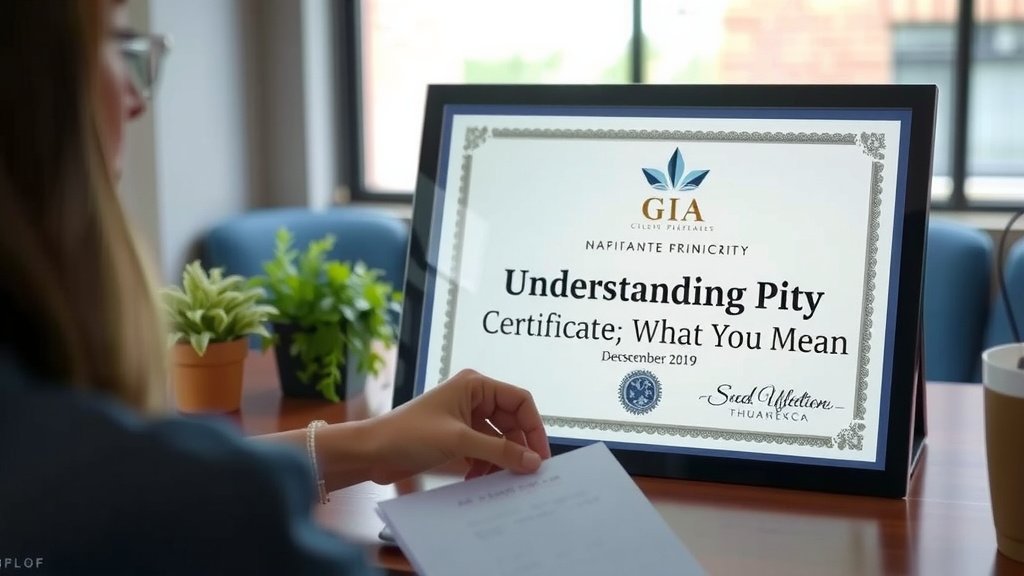
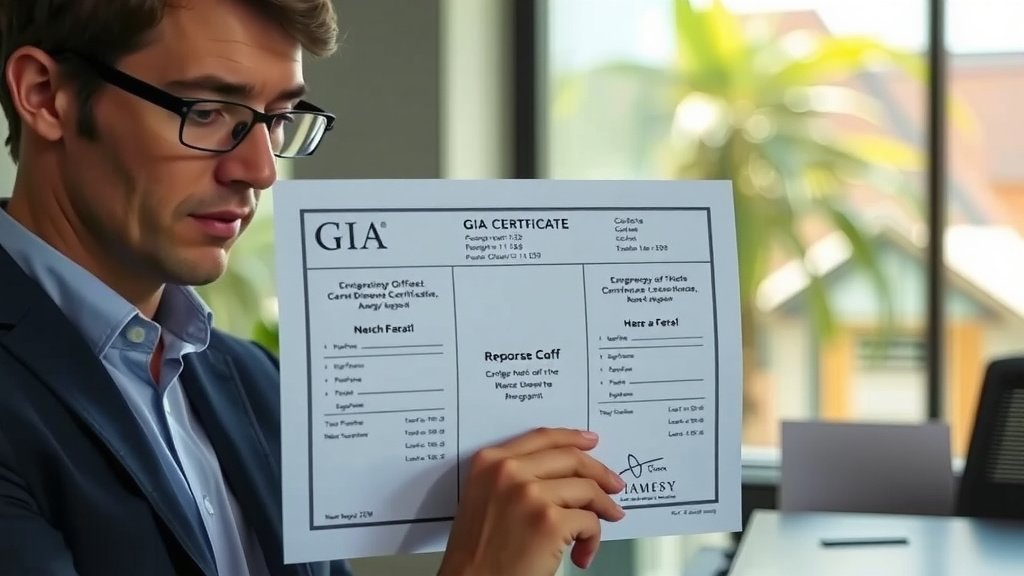
A GIA certificate is essentially a diamond grading report. It’s a document created by the Gemological Institute of America (GIA). This report details a diamond’s unique characteristics. It assures you of the diamond’s quality and authenticity.
Think of it as your diamond’s official birth certificate and report card rolled into one. It provides an unbiased assessment of the 4 Cs: cut, color, clarity, and carat weight. This detailed information helps you understand exactly what you are buying. It ensures you are getting what you pay for.
- A GIA certificate is a diamond’s grading report.
- It’s issued by the Gemological Institute of America.
- It details the diamond’s 4 Cs: cut, color, clarity, and carat weight.
- This report is essential for verifying a diamond’s quality.
- It provides an unbiased assessment of your stone.
Below, we’ll break down what makes a GIA certificate so important and what to look for on one. Let’s get your questions answered!
Understanding Your Diamond’s Official Report
So, what exactly does a GIA certificate do for you? It’s your diamond’s official record. This report is created by the Gemological Institute of America (GIA). They are a world-renowned, independent organization. This certificate tells you everything about your diamond’s quality. It’s like a detailed passport for your gemstone.
Why Trust the GIA Grading Report?
You might be wondering why a GIA report is so special. The GIA is a non-profit organization. They don’t buy or sell diamonds. This means their grading is completely unbiased. Their reports are recognized globally as the most trustworthy. Many jewelers and consumers rely on GIA reports. They ensure fair value and accurate representation.
The 4 Cs: Your Diamond’s Core Qualities
The GIA report focuses on the 4 Cs. These are the universal standards for describing a diamond’s quality. They are Cut, Color, Clarity, and Carat Weight. Each C is graded on a specific scale. This helps you compare diamonds fairly. Let’s break down what each one means for your stone.
Cut: The Sparkle Factor
The cut of a diamond refers to its proportions. It also includes its symmetry and polish. A well-cut diamond will reflect light brilliantly. This creates that beautiful sparkle you love. A poor cut can make a diamond look dull. The GIA grades cut on a scale from Excellent to Poor. A higher grade means better light performance. Think of it as how well the diamond is shaped to shine.
Color: The Absence of Color
Diamond color is graded on a scale from D to Z. D is completely colorless. Z has a light yellow or brown tint. The less color a diamond has, the rarer and more valuable it usually is. However, some people prefer a slight tint. It depends on your personal taste. The GIA uses a very precise color grading system. This ensures consistency. The GIA uses a very precise color grading system to ensure consistency; learn more in our guide.
Clarity: The Purity of the Stone
Clarity refers to the presence of internal characteristics (inclusions) or external blemishes. These are natural birthmarks. Most diamonds have some. The GIA grades clarity on a scale. It goes from Flawless (no visible inclusions or blemishes) to Included (obvious flaws). Most diamonds fall into the Very Slightly Included (VS) or Slightly Included (SI) categories. These are often hard to see without magnification.
Carat Weight: The Size Measurement
Carat weight is simply how much the diamond weighs. One carat is equal to 0.2 grams. Diamond prices generally increase with carat weight. However, cut quality also plays a huge role. A larger diamond with a poor cut might not look as impressive. It might be worth less than a smaller, well-cut diamond. The GIA report will state the exact carat weight.
What Else You’ll Find on a GIA Report
Beyond the 4 Cs, a GIA certificate provides more details. You’ll see the diamond’s exact measurements. This includes its diameter and depth. There are also reports on its fluorescence. Fluorescence is a diamond’s reaction to ultraviolet light. It can sometimes make a diamond appear hazier. But it can also make a diamond look whiter. The GIA report details this. You’ll also see any specific identifying marks.
The GIA Diamond Report Number
Every GIA-graded diamond gets a unique report number. This number is laser-inscribed on the diamond’s girdle. You can use this number to look up your diamond’s report online. It’s a great way to verify your stone. It ensures you’re getting exactly what you paid for. This number is like your diamond’s fingerprint.
| Grade | Description | Visibility |
|---|---|---|
| Flawless (FL) | No inclusions or blemishes visible under 10x magnification. | Not visible to the naked eye. |
| Internally Flawless (IF) | No inclusions visible under 10x magnification. Minor surface blemishes only. | Not visible to the naked eye. |
| Very Slightly Included (VS1-VS2) | Inclusions are minor and difficult to see under 10x magnification. | Generally not visible to the naked eye. |
| Slightly Included (SI1-SI2) | Inclusions are noticeable under 10x magnification. | May be visible to the naked eye in some cases. |
| Included (I1-I3) | Inclusions are obvious under 10x magnification. They may affect transparency and brilliance. | Usually visible to the naked eye. |
Is a GIA Certificate Always Necessary?
Many experts agree that a GIA certificate is highly recommended. Especially for diamonds over a certain size or value. It provides peace of mind. It ensures you are making a well-informed purchase. For smaller or lower-cost diamonds, a jeweler’s memo might suffice. But for significant investments, a GIA report is the gold standard. It protects your investment. Many sources suggest this is the best practice (GIA).
What to Look For When You Get Your Certificate
When you receive your GIA certificate, take a moment to review it. Does the diamond’s description match the stone you’re seeing? Check the report number. You can often find it online on the GIA website. Confirm all the details are correct. It should feel like a complete and accurate document. Think of it as your diamond’s official resume.
- Verify the diamond’s report number matches.
- Check the 4 Cs: Cut, Color, Clarity, Carat Weight.
- Look at the diamond’s measurements and proportions.
- Note any details about fluorescence.
- Ensure the overall description aligns with the stone.
Conclusion
You now understand that a GIA certificate is your diamond’s official report card. It provides an unbiased look at its quality. The 4 Cs—cut, color, clarity, and carat weight—are key. These details help you make an informed decision. They ensure you know exactly what makes your diamond unique. Always ask for a GIA report for significant diamond purchases. This is your best step to ensuring you’re investing wisely in a stone you’ll cherish.
Frequently Asked Questions
Can I buy a diamond without a GIA certificate?
Yes, you can buy a diamond without a GIA certificate, especially for smaller or less expensive stones. However, for larger or more valuable diamonds, a GIA report offers crucial assurance and verification of quality. It’s highly recommended for significant investments.
How do I verify my GIA certificate online?
Every GIA-graded diamond has a unique report number, often laser-inscribed on its girdle. You can visit the official GIA website and enter this report number into their diamond report lookup tool. This will display the details of your diamond’s grading report.
Are all GIA certificates the same?
No, each GIA certificate is unique to the specific diamond it describes. While the format and the grading standards are consistent, the details for the 4 Cs, measurements, and any unique characteristics will differ for every single diamond.
Does GIA grade colored gemstones, not just diamonds?
While GIA is most famous for its diamond grading reports, it also provides grading services for colored gemstones. These reports detail the characteristics of stones like sapphires, rubies, and emeralds, using similar scientific rigor.
What is the difference between a GIA certificate and a jeweler’s appraisal?
A GIA certificate is an objective grading report detailing a diamond’s characteristics based on scientific standards. A jeweler’s appraisal, on the other hand, is often an opinion of value, typically for insurance purposes, and may not be as standardized or unbiased as a GIA report.