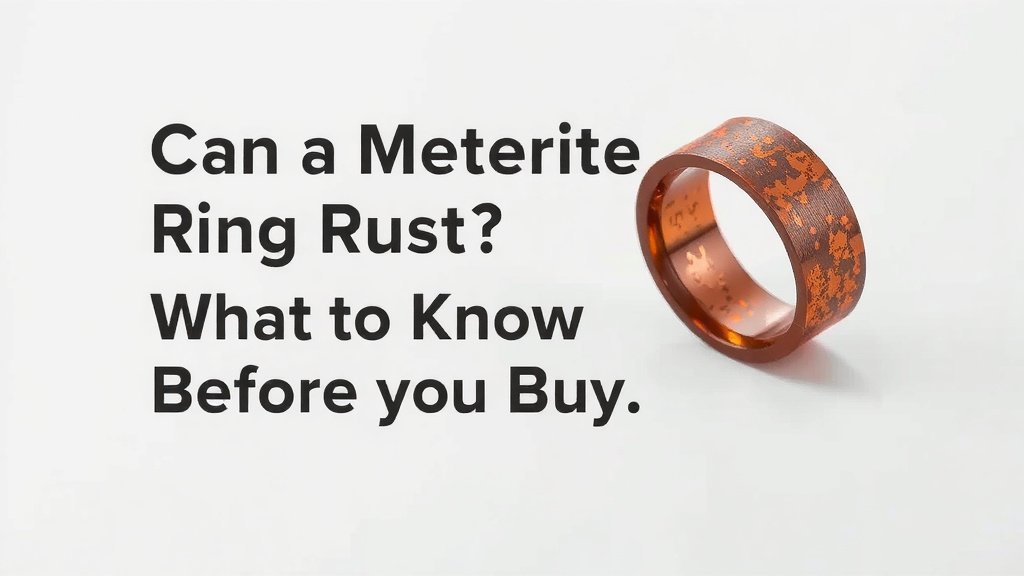
Can a Meteorite Ring Rust? What to Know Before You Buy
No, a meteorite ring cannot rust. Meteorite rings are mostly made of iron and nickel, and nickel resists rust, so these rings won’t corrode the way plain iron would. They can develop a slight patina over time, but that’s not rust.
Here’s the catch: not every “meteorite ring” is the real deal. Some sellers use meteorite-looking etched steel instead, and cheaper steel can rust if it gets wet often. When we researched this topic, we found that many experts say the nickel content in genuine meteorite material is what keeps it safe from corrosion.
TL;DR:
- Real meteorite rings do not rust, thanks to their nickel content.
- They may slowly darken or patina over the years, which is normal.
- Water, sweat, and chemicals can speed up surface changes.
- Fake “meteorite-style” rings made of plain steel can rust.
- Simple care, like drying your ring, keeps it looking great.
Wondering how to tell a real meteorite ring from a fake, or how to keep yours shiny for decades? Below, we break down everything you need to know about meteorite rings and rust, step by step.
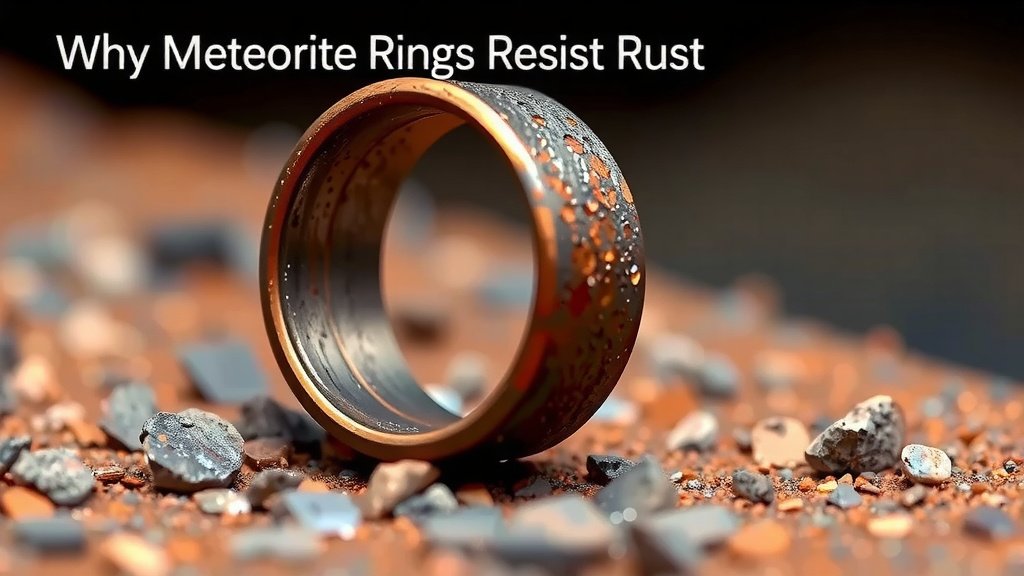
Why Meteorite Rings Resist Rust
The short answer comes down to chemistry. Real meteorite material, like the Gibeon or Muonionalusta types, contains a high amount of nickel mixed with iron. Nickel doesn’t react with oxygen and water the way plain iron does, so rust never forms on it. When we researched how jewelers handle this material, we found most experts agree the nickel content is the built-in bodyguard.
Think of it like stainless steel’s cooler, older cousin. The nickel acts as a shield, blocking the chemical reaction that turns iron into flaky orange rust. So while a cheap iron nail left in the rain turns to mush, your meteorite ring just shrugs it off.
Patina vs. Rust: What’s the Difference?
Here’s where people get confused. Your meteorite ring may darken over time, and some folks mistake that for rust. It’s not. Rust is reddish-orange, flaky, and eats away at metal. Patina is a smooth, gray-to-black surface change that actually protects the metal underneath.
Silver jewelry does the same thing. A little tarnish doesn’t ruin a silver spoon, and a little patina doesn’t ruin your ring. Many collectors even prefer the aged look. It tells a story, and honestly, the ring already has a 4-billion-year head start on character.
What Causes Patina to Form Faster?
Moisture is the main culprit, but not the only one. We found that sweat, hand lotions, chlorine, and even salty air can speed up surface changes. If you hit the gym daily or wash your hands fifty times a shift, expect faster patina. That’s normal wear, not damage.
The Fake Ring Problem: Steel Rings That Can Rust
Now for the part that stings. Some sellers market etched steel rings as “meteorite-style.” These mimic the famous Widmanstätten pattern, but they’re plain steel with almost no nickel. Get them wet often, and yes, they can rust. When we looked into buyer complaints, we found this is one of the most common disappointments in the meteorite ring market.
How do you spot the fakes? Price is a big clue. Genuine meteorite rings usually cost more because the material is rare and tricky to work with. A “meteorite ring” for the price of a pizza? Probably steel.
Quick Ways to Tell Real from Fake
- Ask for the meteorite name, like Gibeon, Muonionalusta, or Seymchan.
- Check the pattern: real Widmanstätten lines are irregular and cross at odd angles.
- Look at the price: real material costs more, period.
- Read the metal description: “stainless steel” or “etched steel” usually means fake.
- Ask about nickel content: legit sellers know their numbers.
What Your Meteorite Ring Is Actually Made Of
Most meteorite rings aren’t 100% space rock. That would be fragile and, frankly, a bad idea. Jewelers typically pair a meteorite inlay with a strong band material. Here’s a quick comparison of what you’ll commonly see:
| Ring Material | Can It Rust? | Everyday Durability |
|---|---|---|
| Gibeon meteorite inlay | No, nickel-rich | Good, needs light care |
| Etched steel band | Yes, if low grade | Varies widely |
| Titanium band | No | Excellent |
| Tungsten carbide band | No | Very hard, can crack |
| Damascus steel band | Some types can | Good with care |
Notice something? The meteorite itself is the safe part. It’s often the other metal in the ring that deserves your attention. Ask the seller what the band is made of before you buy.
Everyday Habits That Protect Your Ring
Good news: caring for a meteorite ring is easy. The main goal is simply keeping moisture from sitting on the surface for hours. You don’t need fancy tools or a chemistry degree. If you want a simple schedule, our guide to how often to clean your ring covers daily wear and different metals.
Your Quick-Care Checklist
- Take the ring off before swimming, hot tubs, or long showers.
- Dry it with a soft cloth after it gets wet.
- Remove it during heavy gym sessions or yard work.
- Apply lotion and sunscreen before putting the ring back on.
- Store it in a dry spot, not a humid bathroom drawer.
- Wipe it down weekly; thirty seconds is all it takes.
What About Sweat and Sensitive Skin?
Sweat is salty and slightly acidic, so it nudges patina along faster. That’s a cosmetic issue, not a safety one. On the skin side, nickel allergies are a real thing for some people. The American Academy of Dermatology notes nickel is one of the most common causes of contact dermatitis. If you’ve ever reacted to cheap earrings or watch bands, ask a jeweler about sealing the meteorite inlay or choosing a hypoallergenic band material. When in doubt, patch-test wearing the ring for short periods first.
Long-Term Care: Keeping That Pattern Crisp
The famous Widmanstätten pattern shows because of acid etching at the factory. Over years, patina can soften the contrast between the light and dark lines. Want to refresh it? Many jewelers offer a quick re-etch service that brings the pattern back to life. We found it’s usually inexpensive and takes little time.
When to Call a Professional
If the ring develops rough spots, deep discoloration, or the inlay feels loose, skip the DIY fixes. A jeweler who works with meteorite can re-etch, re-seal, or re-polish safely. Home sanding can ruin the pattern, and some adhesives used in inlays don’t love household chemicals. When we looked into repair options, we found professional servicing is far cheaper than replacing a cracked or damaged ring.
So, Should You Worry About Water at All?
Not much, no. Splashes, rain, and hand washing are fine. A genuine meteorite ring won’t rust from normal life. Just don’t leave it soaking in a pool or wearing it into a sauna every day, and you’ll be in great shape. Wipe it dry, give it an occasional glance, and your little piece of outer space will keep turning heads for decades.
Conclusion
So here’s the bottom line: a genuine meteorite ring will not rust. The nickel inside the meteorite blocks the corrosion process entirely, and any darkening you see over the years is just patina, not decay. The real rust risk comes from lookalike etched steel rings, or from low-grade metals in the band itself. That’s why it pays to buy from a seller who names their meteorite and knows their metals. Once you’ve got the real thing, a quick dry-off after wet hands is all the maintenance it asks for. Ready to buy? Ask the seller to name the meteorite type before you commit, and you’ll dodge the fakes with confidence.
Frequently Asked Questions
Can a meteorite ring get wet without being damaged?
Yes, occasional water exposure is perfectly fine. Rain, hand washing, and splashes won’t harm a genuine meteorite ring because the nickel content blocks corrosion. Just wipe it dry with a soft cloth afterward so moisture doesn’t sit on the surface for hours.
Will a meteorite ring turn my finger green or black?
Not usually. That green stain comes from copper alloys, which meteorite material doesn’t contain. If your ring has a copper-based band or plating underneath, though, that part could leave marks. Check what the band is made of, especially if your skin is sensitive.
How long does a meteorite ring last with daily wear?
Decades, easily, if you treat it reasonably well. The meteorite inlay is one of the tougher natural materials used in jewelry. Expect the etched pattern to soften slightly over the years, but a jeweler can re-etch it to restore the crisp look. Curious how other ring metals age? Our guide to how long wedding rings last compares durability by material.
Is it okay to wear a meteorite ring in the shower every day?
A real one will survive it, but we wouldn’t recommend making it a habit. Constant moisture and shampoo residue speed up patina, which dulls the Widmanstätten pattern faster. If you shower daily with your ring on, dry it thoroughly and wipe it down weekly.
Can a jeweler re-seal a meteorite ring to prevent tarnish?
Yes, and it’s a common service. Many jewelers apply a protective sealant over the inlay to slow moisture contact and patina. When we looked into this, we found sealing is a smart move for people with sweaty hands or nickel sensitivity, though it may need reapplying every few years.