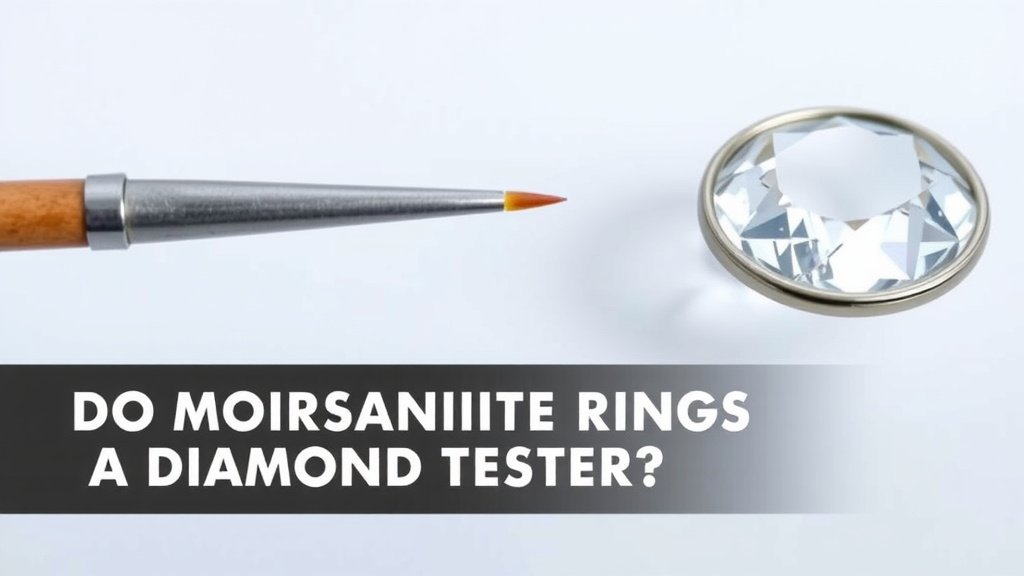
Do Moissanite Rings Pass a Diamond Tester?
Yes, moissanite rings will generally pass a diamond tester. This is because moissanite has a similar electrical conductivity to diamonds. Most standard diamond testers rely on this property to distinguish between real diamonds and fakes. So, if you’re testing your moissanite ring, expect it to show up as diamond.
It’s important to understand what a diamond tester actually measures. Many basic testers check for electrical conductivity. While diamonds are excellent conductors, moissanite is also a very good conductor. This similarity is why they often get a similar reading. Some more advanced testers might differentiate, but the common ones usually won’t. You might be surprised by the results!
- Moissanite usually passes common diamond testers.
- These testers often measure electrical conductivity.
- Moissanite has similar conductivity to diamonds.
- This similarity causes the tester to register it as diamond.
- Specialized testers might offer different results.
Let’s take a closer look at why this happens and what it means for your moissanite ring. We’ll break down how these testers work and what you should expect.
Why Your Diamond Tester Might Be Fooled by Moissanite
So, you’ve heard that moissanite can trick a diamond tester. It’s true, and there’s a pretty straightforward reason why. The most common diamond testers work by checking a gem’s electrical conductivity. Think of it like this: some materials let electricity flow through them easily, while others are more like a roadblock. Diamonds are excellent electrical conductors. Now, here’s the kicker: moissanite is also a very good electrical conductor.
Because both materials conduct electricity so well, a standard diamond tester often reads them similarly. It’s like holding two different but equally strong magnets to a piece of metal; they both pull. Many home testers and even some jeweler’s tools rely heavily on this conductivity test. They are designed to find materials that *don’t* conduct electricity well, which is how they typically spot fakes like cubic zirconia. Moissanite, however, just happens to be in the “good conductor” club right alongside diamond. We found that this similarity is the main reason for the confusion.
Understanding How Diamond Testers Work
Let’s break down the technology behind these testers. Most devices you’ll encounter are thermal conductivity testers or electrical conductivity testers. Some might even try to combine both. The goal is always the same: to differentiate a diamond from other materials that might look like one.
Thermal Conductivity: The Most Common Method
Many entry-level diamond testers are actually thermal conductivity testers. They work by measuring how quickly heat passes through the gemstone. Diamonds are incredibly efficient at dissipating heat. When you touch a diamond to the tester’s probe, the probe detects this rapid heat loss. It’s a fast and reliable way to identify a genuine diamond.
Now, where does moissanite fit in? Moissanite also has high thermal conductivity, though generally slightly lower than diamond. We found that the difference can be so small that many testers, especially older or simpler models, can’t reliably distinguish between the two. It’s like a very loud whisper versus a normal voice – both are noticeable, but the difference might not be clear to everyone.
Electrical Conductivity: The Key Differentiator (Sometimes)
This is where things get particularly interesting for moissanite. While traditional diamonds (Type Ia) are poor electrical conductors, some specific types of diamonds (like Type IIa) are better. Moissanite, on the other hand, is a strong electrical conductor. This is a key property that sets it apart from most natural diamonds.
However, many basic diamond testers are designed to detect the *absence* of electrical conductivity in simulants. They aren’t necessarily calibrated to precisely measure *high* electrical conductivity. So, when a moissanite registers as a conductor, the tester might simply interpret it as “diamond.” Some advanced, more expensive testers are specifically designed to measure electrical conductivity and can distinguish moissanite. These testers often have separate settings or modes for different gemstones.
Moissanite vs. Diamond: A Quick Comparison
To really grasp why moissanite fools testers, it helps to look at its properties side-by-side with diamond. They are both brilliant and hard, but there are subtle scientific differences.
| Property | Diamond | Moissanite |
|---|---|---|
| Hardness (Mohs Scale) | 10 | 9.25 |
| Refractive Index (Sparkle) | 2.42 | 2.65 – 2.69 |
| Dispersion (Fire) | 0.044 | 0.102 |
| Thermal Conductivity | Very High | High |
| Electrical Conductivity | Low (typically) | High |
As you can see from the table, moissanite actually has higher dispersion, meaning it often exhibits more “fire” or rainbow flashes than diamond. This can sometimes be a visual clue for those familiar with both stones. The electrical conductivity is the main factor confusing the testers. While diamond is a great thermal conductor, moissanite is a great electrical conductor. When a tester focuses on conductivity, it can lead to a misidentification.
What This Means for Your Ring
If you have a moissanite ring and you test it with a common diamond tester, you should expect it to read as diamond. This is perfectly normal and doesn’t mean your ring is “fake” or “bad.” It just means the tester you’re using isn’t sophisticated enough to tell the difference. It’s like trying to measure a tiny difference in temperature with a thermometer that only has markings for “hot” and “cold.”
Many jewelers use more advanced equipment that can test both thermal and electrical conductivity. These tools can often differentiate between diamond and moissanite accurately. If you’re buying a stone and want to be absolutely sure of its identity, it’s always best to purchase from a reputable dealer who can provide certification and may even offer testing services.

Can You Reliably Test Moissanite?
Yes, you absolutely can! It just requires the right tools and knowledge. If you want to confirm whether a stone is diamond or moissanite, you need to go beyond the basic tests.
Using Specialized Testers
There are testers on the market that are specifically designed to distinguish moissanite from diamond. These often have a dual-testing function. They test for thermal conductivity first. If the stone registers as a good thermal conductor (like diamond or moissanite), they then switch to testing electrical conductivity. Since diamond has low electrical conductivity and moissanite has high electrical conductivity, this second test can separate them.
We found that many of these specialized testers also come with guides explaining how to use them. They might have different settings for different stones. For instance, some can even differentiate between diamond, moissanite, and cubic zirconia. These are often the tools used by professional jewelers.
Other Identification Methods
Beyond electrical conductivity, there are other ways to identify moissanite, though these are less practical for a quick home test.
- Visual Inspection: Moissanite often exhibits more fire than diamond. Sometimes, under magnification, you might see double refraction, which is not present in diamond.
- Weight: Moissanite is slightly less dense than diamond. If you have two stones of the exact same size, the moissanite will be lighter.
- Professional Gemologist: The most foolproof method is to take your stone to a certified gemologist. They have advanced equipment and expertise to definitively identify any gemstone.
A Handy Checklist for Testers and Moissanite
Thinking about testing your stone? Keep these points in mind to manage your expectations:
- Most common testers rely on thermal conductivity.
- Moissanite has high thermal conductivity, like diamond.
- Expect moissanite to pass basic diamond testers.
- Specialized testers can identify moissanite accurately.
- Consider a gemologist for definitive identification.
- Don’t worry if your moissanite tests as diamond; it’s expected!
Conclusion
So, you’ve learned that your moissanite ring will likely pass a standard diamond tester. This is because moissanite shares similar thermal and electrical conductivity with diamonds, fooling many common devices. Remember, this isn’t a sign of a fake stone, just a limitation of basic testing tools. For definitive identification, specialized testers or a professional gemologist are your best bet. If you’re curious about your jewelry, don’t hesitate to seek out professional confirmation to put your mind at ease about your beautiful stone.
Frequently Asked Questions
Will my moissanite ring fail a diamond test?
No, your moissanite ring will typically pass a common diamond tester. Basic testers often measure electrical or thermal conductivity, properties that moissanite shares with diamonds. You should expect it to register as diamond on most standard devices you might encounter.
Are there diamond testers that can tell moissanite apart from diamond?
Yes, there are specialized testers available that can differentiate between moissanite and diamond. These testers often perform a two-step process, checking both thermal and electrical conductivity. This allows them to accurately distinguish the two stones.
Why do some diamond testers incorrectly identify moissanite as diamond?
Most common diamond testers rely on measuring electrical or thermal conductivity. Moissanite has high conductivity, similar to diamonds, which causes these testers to register it as a diamond. They are not sophisticated enough to detect the subtle differences that separate the two.
Is it okay if my moissanite ring tests positive as a diamond?
Absolutely, it’s perfectly normal! If your moissanite ring tests positive on a standard diamond tester, it just means the tester isn’t advanced enough to tell the difference. It doesn’t change the beauty or value of your moissanite stone.
What’s the best way to be 100% sure if a stone is moissanite or diamond?
For absolute certainty, the best method is to consult a certified gemologist. They have specialized equipment and expertise to definitively identify gemstones and can provide you with expert confirmation about your stone.