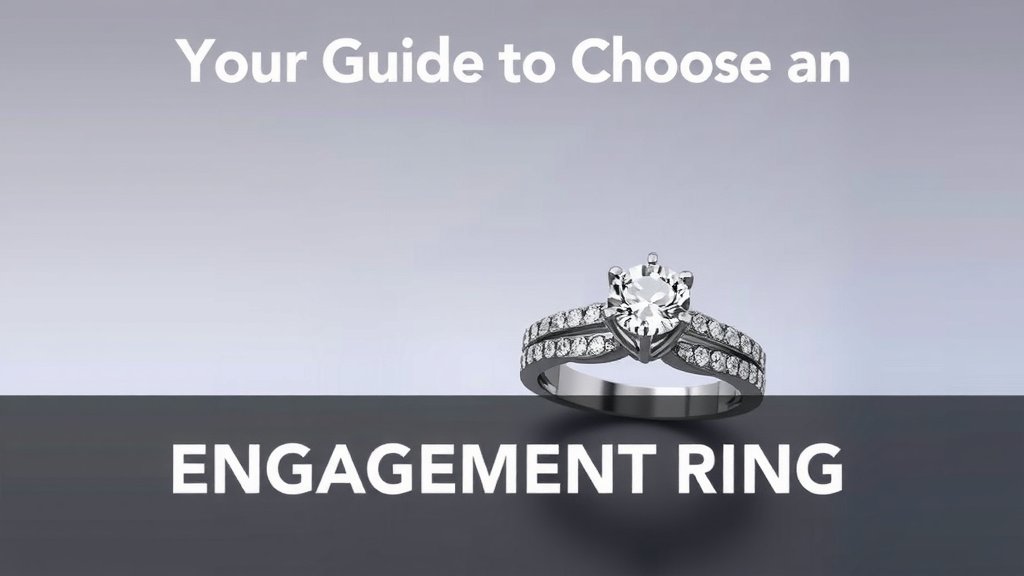
Your Guide to Choosing the Perfect Engagement Ring
Choosing an engagement ring involves considering your partner’s style, the ring’s metal, and the diamond’s quality. You’ll want to balance these factors within your budget. Finding the perfect ring shows you truly know and care about their preferences.
Many people feel overwhelmed by the options. We’ve found that understanding the basics of diamonds and metals helps. Think about their daily life too. A ring should be beautiful and fit their lifestyle. We’ll help you navigate this exciting decision.
- Consider your partner’s personal style.
- Think about the metal type and color.
- Learn the 4 Cs of diamond quality: cut, color, clarity, and carat.
- Set a realistic budget before you shop.
- Don’t forget about the ring’s setting and design.
Let’s walk through exactly how to choose an engagement ring that will make them say “yes” (and “wow!”) below.
Navigating Your Engagement Ring Search
Finding the perfect engagement ring can feel like a big task. But don’t worry, we’re here to help you through it. It’s about understanding a few key elements. This guide breaks it down simply. You’ll feel more confident with each step.
Understanding Your Partner’s Style
This is the most important part. Think about what your partner wears every day. Do they prefer simple and classic pieces or something more bold and unique? Look at their current jewelry. Are there certain shapes or colors they gravitate towards?
Classic & Timeless Preferences
If your partner leans towards classic styles, a solitaire setting might be perfect. These rings feature a single, stunning diamond. They are elegant and never go out of style. Think of the iconic princess cut or round brilliant diamond. These are popular choices for a reason. They offer maximum sparkle.
Modern & Unique Tastes
For a partner who loves to stand out, consider modern settings. Geometric shapes, clean lines, or unique side stones can be great options. Halo settings, where smaller diamonds surround the center stone, add extra sparkle and dimension. They also can make the center diamond appear larger.
Vintage-Inspired Charm
Some people adore the romance of bygone eras. Look for rings with intricate details like milgrain or filigree. Art Deco or Victorian-inspired designs offer a lot of character. These rings tell a story and have a beautiful, antique feel.
Choosing the Right Metal
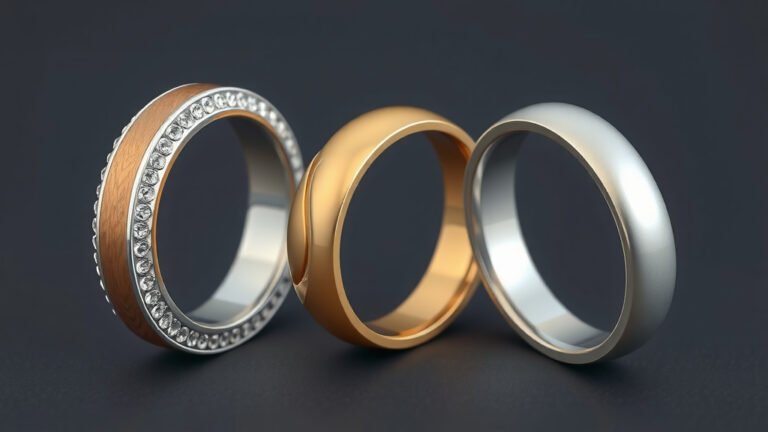
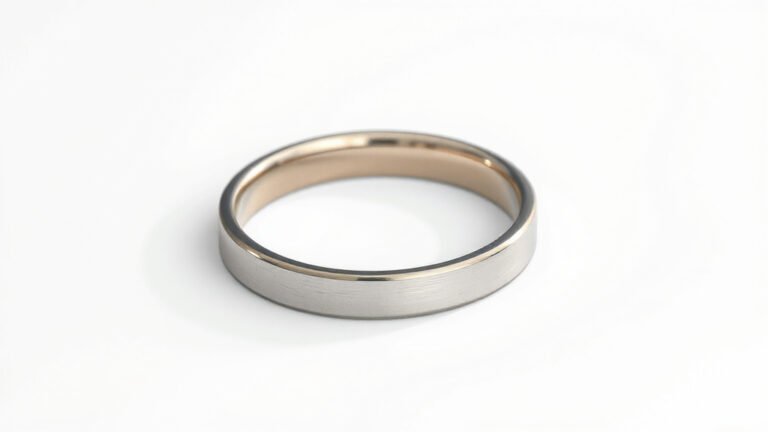
The metal band is the foundation of the ring. It affects the look, durability, and price. Most engagement rings are made from gold, platinum, or palladium. Each has its own benefits.
Gold: The Popular Choice
Gold is a classic for a reason. It comes in different colors: yellow, white, and rose. Yellow gold is traditional and warm. White gold offers a modern, silvery look. Rose gold has a romantic, pinkish hue that’s very trendy. Pure gold is too soft for rings, so it’s mixed with other metals. This is called the karat system.
Understanding Karats
You’ll see 14k and 18k gold most often. 18k gold has more pure gold (75%) and is softer. 14k gold has less pure gold (58.3%) but is more durable. This makes it a great choice for everyday wear. We found that 14k is a popular balance of purity and strength.
Platinum: The Premium Option
Platinum is a naturally white metal. It’s very strong and durable. Platinum is also hypoallergenic, which is good for sensitive skin. It tends to be more expensive than gold. It has a beautiful, weighty feel.
Palladium: A Lighter Alternative
Palladium is part of the platinum family. It’s naturally white, durable, and lighter than platinum. It’s also less expensive. It’s a growing choice for those who like platinum’s look but want a more budget-friendly option.
Decoding Diamond Quality: The 4 Cs
Diamonds are graded using four main factors, known as the 4 Cs. Understanding these will help you choose the best diamond for your budget. Experts agree these are the key to assessing diamond value (GIA). They are Cut, Color, Clarity, and Carat.
Cut: The Sparkle Factor
A diamond’s cut refers to how well it’s proportioned. This greatly impacts its brilliance and sparkle. A well-cut diamond reflects light efficiently. Poorly cut diamonds can look dull or lifeless. Many gemologists say the cut is the most important of the 4 Cs. An excellent or very good cut is recommended.
Color: The Absence of Hue
Diamond color is graded on a scale from D to Z. D is completely colorless, and Z has a light yellow or brown tint. The less color a diamond has, the rarer and more expensive it is. For most people, diamonds in the G to J range offer excellent value. They appear colorless to the naked eye.
Clarity: Flaws and Imperfections
Clarity measures tiny natural imperfections, called inclusions. Most diamonds have them. The fewer inclusions, the higher the clarity grade and the more the diamond costs. Grades range from Flawless (no visible inclusions) to Included (obvious flaws). For most rings, a clarity grade of VS (Very Slightly Included) or SI (Slightly Included) is a smart choice. Inclusions are often not visible without magnification.
Carat: The Weight Measure
Carat refers to the diamond’s weight, not its size. One carat is equal to 200 milligrams. Larger diamonds are rarer and thus more expensive. The price increases significantly with each carat increase. Remember that cut also affects how large a diamond appears. A well-cut 1-carat diamond might look as big as a poorly cut 1.2-carat diamond.
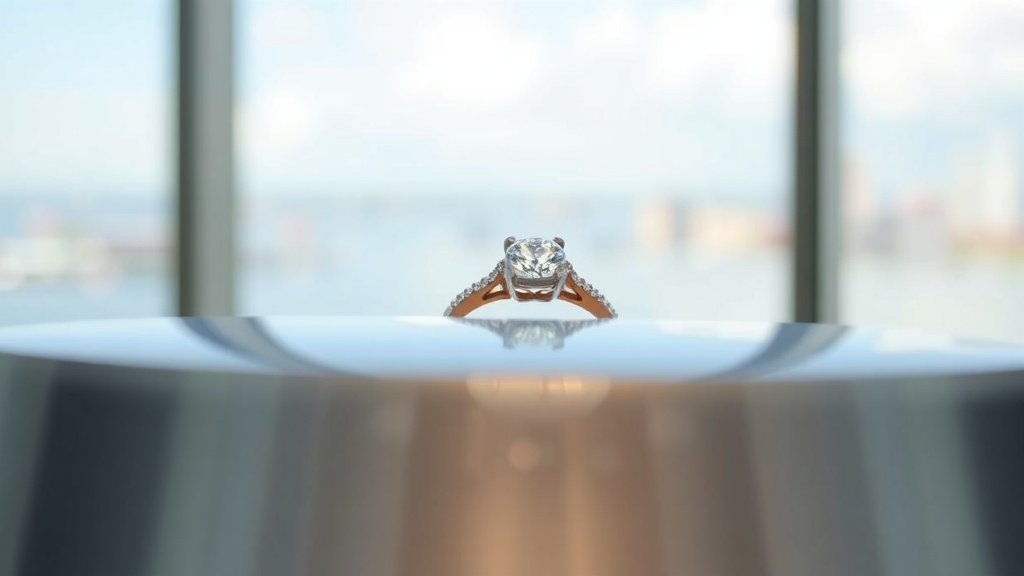
Setting Styles and Their Impact
The setting holds the diamond in place. It also significantly influences the ring’s overall look. Different settings offer varying levels of protection and style.
Common Setting Types
- Prong Setting: The most popular. Metal prongs hold the diamond securely. They allow maximum light to enter the stone for sparkle.
- Bezel Setting: A metal rim surrounds the diamond. This offers excellent protection and a sleek look.
- Pavé Setting: Tiny diamonds are set closely together on the band. This creates a beautiful, glittering effect.
- Channel Setting: Diamonds are set in a row within a channel of metal. This protects the stones well.
Budgeting for Your Dream Ring
Setting a budget early on is essential. It helps you focus your search. Remember that the ‘perfect’ ring doesn’t have to break the bank. There are beautiful options at every price point. Consider what you can comfortably afford.
Prioritizing Your Budget
Decide which of the 4 Cs is most important to you and your partner. Are you willing to compromise slightly on clarity to get a larger carat weight? Or is a colorless diamond a must-have? Prioritizing helps you allocate your funds wisely. Many couples find that a slightly lower color or clarity grade is undetectable to the naked eye.
Checklist: Your Engagement Ring Journey
Ready to start shopping? Keep this handy checklist to guide you:
- Observe your partner’s current jewelry and style.
- Research different metal types and colors.
- Learn the 4 Cs: Cut, Color, Clarity, and Carat.
- Set a realistic budget before you look.
- Consider how the ring’s setting fits their lifestyle.
- Don’t be afraid to ask jewelers questions!
Conclusion
You’re now equipped to choose an engagement ring that truly reflects your partner’s personality and your love. By focusing on their style, understanding metal options, and decoding diamond quality, you can navigate the process with confidence. Remember to set a budget early and consider the ring’s setting for everyday wear. Your thoughtful approach will lead you to a ring they’ll cherish forever. Happy shopping – you’ve got this!
Frequently Asked Questions
What if I don’t know my partner’s exact ring size?
Don’t stress if you’re unsure of the exact size. You can subtly borrow a ring they wear on their ring finger and have a jeweler measure it. Alternatively, you can trace the inside of one of their rings or use a ring sizing app on your phone as a guide. Most jewelers offer one free resizing after purchase.
Are lab-grown diamonds a good alternative to mined diamonds?
Yes, lab-grown diamonds are chemically, physically, and optically identical to mined diamonds. They are often more affordable, allowing you to get a larger stone or higher quality for your budget. We found that many couples consider them a sustainable and ethical choice.
How important is the diamond’s fluorescence?
Diamond fluorescence refers to how a diamond reacts to ultraviolet light. While it’s part of the grading report, it’s often not a major concern for most buyers. Strong blue fluorescence can sometimes make a diamond appear whiter, but it can also make it look hazy. We recommend looking at the stone in person to see how it appears.
What if my partner wants a colored gemstone instead of a diamond?
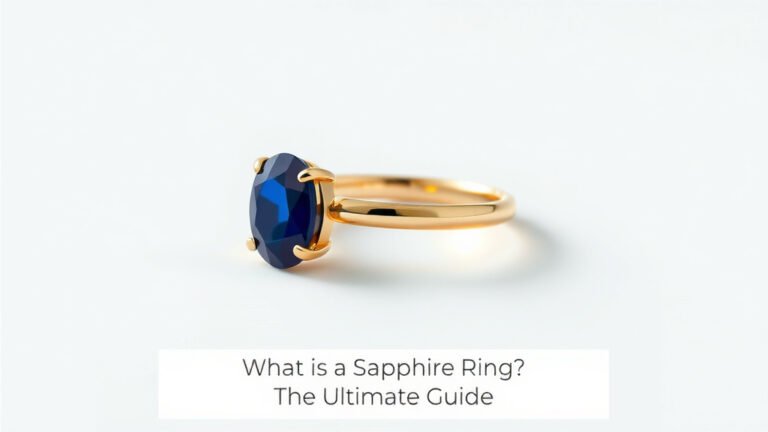
That’s a wonderful option! Many couples choose colored gemstones like sapphires, emeralds, or rubies for their engagement rings. These can be just as beautiful and meaningful as diamonds. Consider your partner’s favorite color and research the durability of different gemstones for daily wear.
Can I return or exchange an engagement ring if my partner doesn’t like it?
Most reputable jewelers have a return or exchange policy, but it’s important to check the specific terms before purchasing. Understanding the policy can give you peace of mind. It’s always best to communicate openly with your partner about the engagement process if possible.