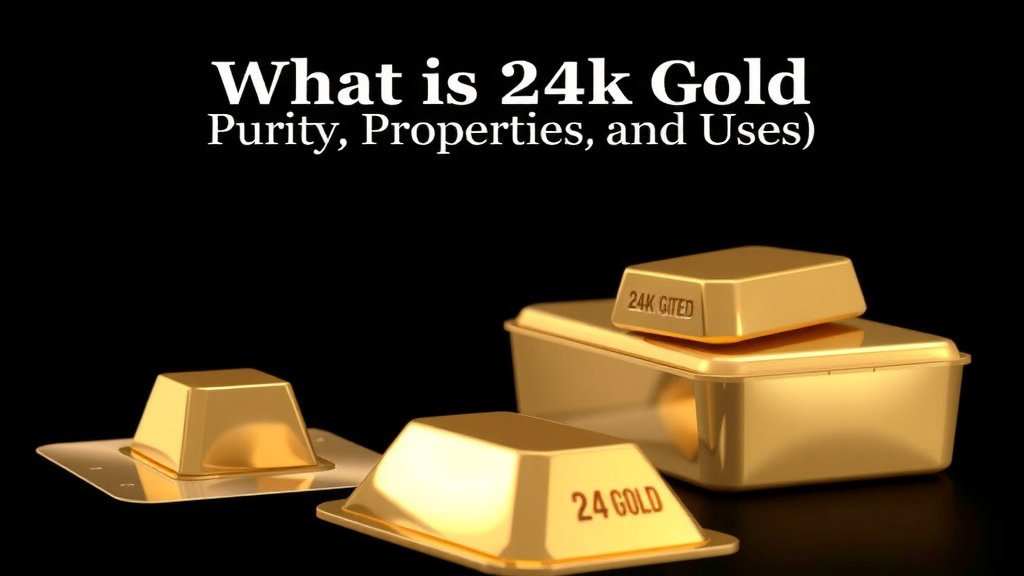
What is 24k Gold: Purity, Properties, and Uses
24k gold is the purest form of gold you can get. It means the gold is 100% pure, with no other metals mixed in. This is why it’s often called pure gold.
When you see jewelry or other items described as 24k, you’re looking at the highest possible gold purity. While it’s the softest and most easily scratched, its brilliant yellow color is unmatched. This purity makes it ideal for certain uses, though less common in everyday jewelry than lower karats.
- 24k gold means 100% pure gold.
- It’s the highest purity level available.
- Pure gold is very soft and bright yellow.
- Lower karats are often used for jewelry.
Let’s dive into what makes 24k gold so special and how it differs from other gold types you might encounter.
So, you’re curious about 24k gold. What does that number really mean, and why is it different from the gold you might see in your grandmother’s locket or a chunky men’s ring? Let’s break it down.
Understanding the Purity of Gold
When we talk about gold purity, we’re essentially talking about how much actual gold is in a piece versus other metals mixed in. Think of it like a recipe for cookies; you can have a recipe that’s mostly chocolate chips with a little bit of dough, or one that’s mostly dough with just a few chocolate chips. Gold works kind of the same way.
The system used to measure this is called “karats.” You’ve probably seen “14k” or “18k” on jewelry. This is a standardized way to tell you how pure the gold is. The highest number you can possibly get is 24k. This means you’re looking at the purest gold available. It’s like the gold standard, literally! The karat system tells you how much pure gold is in the metal.
What Exactly Does 24 Karat Mean?
Simply put, 24k gold means the metal is 100% pure gold. There are no other metals mixed in. No copper, no silver, no nickel – just pure, beautiful gold. This is why it’s often called “pure gold” or “99.9% pure gold” because achieving absolute 100% can be incredibly difficult in manufacturing. So, when you see “24k,” you know you’re getting the real deal, straight from the source.
It’s the gold in its most natural, unadulterated state. Imagine holding a pure gold nugget – that’s the kind of purity we’re talking about. This level of purity has some unique characteristics that set it apart from other gold types.
The Karat System Explained
The karat system is a way to quantify gold purity. It’s based on a scale of 24 parts. So, if something is 24k, it means it’s 24 out of 24 parts gold. If it’s 18k, it means 18 out of 24 parts are gold, and the other 6 parts are other metals.
Here’s a quick look at how common karats stack up:
| Karat | Gold Purity (%) | Other Metals (%) |
|---|---|---|
| 24k | 99.9% | 0.1% |
| 22k | 91.7% | 8.3% |
| 18k | 75.0% | 25.0% |
| 14k | 58.5% | 41.5% |
| 10k | 41.7% | 58.3% |
As you can see, 24k gold has the highest percentage of pure gold. This purity comes with specific benefits and drawbacks that you should know about.
Characteristics of 24k Gold
What makes 24k gold stand out? Well, it’s all about its properties. Pure gold has a distinct look and feel that you won’t find in lower karats.
The Brilliant Yellow Hue
One of the most striking features of 24k gold is its color. It has a deep, vibrant, almost radiant yellow color that is truly unmistakable. This is the pure, intense yellow that most people picture when they think of gold. Lower karat golds often have a paler or slightly different hue because of the other metals mixed in. Think of it like adding a tiny splash of water to a rich paint color – it changes the intensity. 24k gold is that rich, undiluted color.
Softness and Malleability
Here’s where 24k gold’s purity becomes its biggest challenge for everyday wear. Pure gold is incredibly soft and malleable. It’s so soft, in fact, that you could actually dent it with your fingernail. This makes it prone to scratching, bending, and deforming easily.
Because of this softness, 24k gold is generally not recommended for everyday jewelry like engagement rings or bracelets that will experience a lot of wear and tear. It’s just too delicate for that kind of use. Many experts agree that lower karats, like 14k or 18k, offer a better balance of beauty and durability for jewelry (Jewelry Industry Research Institute).
Hypoallergenic Properties
Do you or someone you know have sensitive skin? Pure gold is a fantastic option. Because 24k gold is 100% pure, it doesn’t contain common allergens like nickel or copper, which are often found in lower karat alloys. This means 24k gold is typically hypoallergenic and a great choice for people who react to other metals.
If you’ve ever had a reaction to jewelry before, pure gold might be the solution you’ve been looking for. It’s a gentle metal that most people can wear without any issues.
Where You’ll Find 24k Gold
Given its softness, where does 24k gold actually get used? You might be surprised to learn it’s quite common in certain applications.
Investment and Bullion
This is where 24k gold truly shines. Because it’s pure, it’s the preferred form for gold investments. Think gold bars, coins like American Eagles or Canadian Maple Leafs, and other forms of bullion. These are bought and sold based on their gold content, and purity is key.
When you invest in gold bullion, you want to know you’re getting the most gold for your money. That’s why bullion is almost always minted in 24k purity. It’s the most straightforward way to hold pure gold as an asset.
Specialty Jewelry and Cultural Significance
While not ideal for everyday wear, 24k gold is sometimes used for specific types of jewelry. In many Asian cultures, particularly in places like China, India, and Southeast Asia, 24k gold holds significant cultural importance. It’s often used for traditional wedding jewelry, religious artifacts, and ceremonial pieces.
These pieces might be worn only on special occasions, so their delicate nature isn’t as much of a concern. The intense yellow color is also highly prized in these traditions, symbolizing wealth, prosperity, and good fortune. You might also see 24k gold used for ornamental purposes or as plating over less precious metals for a high-end look without the full cost.
Electronics and Dentistry
Believe it or not, pure gold has practical uses beyond adornment and investment. Its excellent conductivity and resistance to corrosion make it ideal for certain high-tech applications. You can find thin layers of 24k gold in electronic components, like connectors and contacts, where reliability is essential. It ensures a stable connection and prevents degradation over time (National Science Foundation).
In the dental field, pure gold was historically used for fillings and crowns because it’s non-reactive and biocompatible. While newer materials are more common now, gold’s properties still make it a suitable choice for certain dental restorations.

Why Not All Jewelry is 24k
So, if 24k is the purest, why don’t we see more of it in, say, your average necklace or ring? The answer comes back to its properties.
Durability for Daily Life
As we’ve touched on, 24k gold is very soft. For jewelry you wear every day, you need something tougher. Metals like copper, silver, zinc, and nickel are added to gold to make it harder, more durable, and resistant to scratches and dents. This is why 14k and 18k gold are far more common in the jewelry market.
Think about it: would you want your wedding ring to easily get nicks and bends from just daily activities? Probably not! Lower karats offer that added resilience while still giving you a substantial amount of real gold.
Cost Considerations
Pure gold is also more expensive, dollar for dollar, than lower karat gold. When you buy 14k gold jewelry, you’re paying for 58.5% pure gold plus the cost of the other metals and the craftsmanship. With 24k gold, you’re paying for 99.9% pure gold, which drives up the price significantly. This makes 24k gold jewelry a bigger investment.
For everyday pieces, a lower karat offers a more accessible price point for those who want to enjoy the look and feel of gold without the premium cost of pure gold.
Here’s a quick checklist to remember the key takeaways about 24k gold:
- It’s 100% pure gold.
- It has a vibrant, deep yellow color.
- Pure gold is very soft and can scratch easily.
- It’s hypoallergenic, good for sensitive skin.
- Common in investments (bullion) and cultural jewelry.
- Less common for daily wear jewelry due to softness.
Conclusion
So, you now know that 24k gold is the purest form of gold available. It’s celebrated for its brilliant yellow color and hypoallergenic properties, making it a top choice for investments like bullion and culturally significant jewelry. While its softness means it’s not ideal for everyday wear, understanding its purity helps you appreciate its unique value.
When you’re considering gold purchases, whether for investment or adornment, remember 24k gold’s distinct characteristics. Now you’re equipped to make informed decisions about this precious metal. Think about what your needs are – durability for daily wear or the pure richness of 24k gold – and choose wisely!
Frequently Asked Questions
Is 24k gold worth more than 14k gold?
Yes, 24k gold is generally worth more than 14k gold because it is pure gold. Since it contains a higher percentage of gold, its market value per ounce is higher. You are essentially paying for more pure gold content with 24k items.
Can you wear 24k gold jewelry every day?
It’s generally not recommended to wear 24k gold jewelry every day. Because pure gold is very soft, it can easily scratch, bend, or dent with regular use. Lower karats like 14k or 18k offer better durability for daily wear.
Does 24k gold tarnish?
No, 24k gold does not tarnish. Pure gold is a noble metal and is highly resistant to corrosion and oxidation. Tarnishing is typically caused by other metals in an alloy reacting with elements in the environment.
What is the difference between 24k gold and gold plating?
24k gold is solid, pure gold throughout the entire piece. Gold plating, on the other hand, involves a thin layer of 24k gold applied over a less expensive base metal. The plating can wear off over time, revealing the metal underneath.
Is 24k gold good for sensitive skin?
Yes, 24k gold is excellent for sensitive skin. Because it is 100% pure, it lacks the nickel, copper, or other alloys that often cause allergic reactions. This makes it a hypoallergenic choice for most people.