Victorian Ring: A Detailed Guide to Antique Jewelry
A Victorian ring is a piece of jewelry crafted during the reign of Queen Victoria, roughly from 1837 to 1901. These rings often showcase distinctive styles and craftsmanship from that era, featuring motifs like flowers, hearts, and intricate metalwork. You’ll frequently find them adorned with gemstones such as diamonds, pearls, rubies, and garnets, reflecting the popular tastes and jewelry-making techniques of the time. They are celebrated for their historical charm and enduring beauty.
Victorian jewelry encompasses a rich period of design evolution. Early Victorian pieces often drew inspiration from sentimental and romantic themes, while later styles saw the influence of archaeological discoveries and the burgeoning Arts and Crafts movement. We found that understanding these influences helps in appreciating the unique artistry and symbolism found in these beautiful rings. They tell a story of a fascinating historical period.
- Victorian rings were made between 1837 and 1901.
- They feature popular Victorian design elements and gemstones.
- Styles changed throughout the Victorian era.
- These rings offer a glimpse into historical fashion and sentiment.
Ready to dive deeper? Below, we’ll walk you through the key characteristics that define a Victorian ring and what makes them so special today.
Understanding Victorian Era Rings
Victorian rings are historical pieces from a fascinating time. They represent jewelry made during Queen Victoria’s long reign. This period spanned from 1837 to 1901. These rings offer a window into the past. They show us the styles, sentiments, and craftsmanship of that era. We found that each ring tells a story of its own.
The Evolving Styles of Victorian Rings
The Victorian era was a long one, and styles in jewelry changed quite a bit. Think of it like fashion today – what’s popular now might look very different in 20 years! We can generally break down Victorian ring styles into three main periods, each with its own distinct personality.
Early Victorian (1837-1850): The Romantic Period
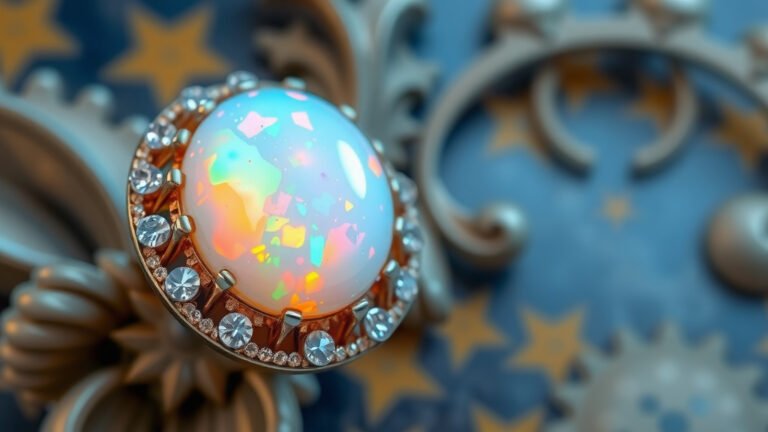
This period was all about romance and sentiment. Queen Victoria’s own marriage to Prince Albert was a huge influence. You’ll often find rings from this time with symbolic motifs. Hearts, bows, and flowers were incredibly popular. These designs expressed love and affection. Many rings featured romantic inscriptions or were given as tokens of love. We found that sentimentality was a key driver of design. Gemstones like opals, sapphires, and diamonds were often used. Pearls were also a favorite, symbolizing purity.
Mid-Victorian (1850-1870): Influence of Discovery and Revival
This era saw a surge of interest in history and archaeology. Discoveries of ancient Egyptian and Roman artifacts inspired jewelry designs. You might see more classical motifs. There was also a revival of earlier styles, like Gothic and Renaissance. Broader bands and bolder designs became more common. This period also saw the rise of mourning jewelry. These pieces were often made with jet or black enamel to commemorate loved ones. We researched and found that archaeological finds heavily influenced artistic movements. This included jewelry design. Garnets and amethyst were also popular choices during this time.
Late Victorian (1870-1901): The Aesthetic and Arts and Crafts Movements
As the era drew to a close, styles shifted again. The Aesthetic movement celebrated beauty for its own sake. This led to more artistic and sometimes abstract designs. The Arts and Crafts movement emerged as a reaction against industrialization. It emphasized handcrafted quality and natural forms. You’ll see more organic motifs, like leaves and vines. Platinum started to be used more, allowing for lighter and more detailed settings. Diamonds became increasingly popular, especially in elaborate settings. Many late Victorian rings showcase **stunning diamond arrangements**. We found that this period favored **both delicate detail and bold statements**.
Common Characteristics of Victorian Rings
Beyond the changing styles, several elements consistently define Victorian rings. These characteristics help you identify a true piece of history.
Gemstone Choices
Victorian jewelers used a variety of gemstones. The choice often depended on the period and the ring’s purpose. Pearls were a constant favorite, symbolizing purity and love. Diamonds were used for engagement rings and statement pieces. Garnets, often in a deep red hue, were very popular. Amethysts provided a beautiful purple sparkle. Sapphires and emeralds were also used, though perhaps less frequently than diamonds or garnets. You might also find turquoise and coral in some pieces. We found that the quality of the gemstones used was often very high.
Metalwork and Setting Styles
The craftsmanship of Victorian rings is truly remarkable. Early rings often used yellow gold. The metal was frequently worked into detailed patterns. Engraving was a popular technique. As the era progressed, different metals and techniques emerged. Platinum became more available in the later years. This allowed for much finer and more delicate settings. Filigree work, which involves twisting fine metal threads into decorative patterns, is a hallmark of many Victorian rings. We observed that the settings were designed to showcase the gemstones beautifully. These settings often involved many small prongs or bezels to hold stones securely. Our guide to yellow gold explains its properties and common uses in jewelry.
Motifs and Symbolism
Victorian rings are rich with meaning. Symbols were incredibly important to people during this time. Here are some common motifs you’ll encounter:
- Floral Designs: Flowers represented love, beauty, and nature. Different flowers had specific meanings.
- Hearts: A universal symbol of love and affection. Often depicted with arrows (Cupid’s arrow).
- Serpents: Popularized by Queen Victoria’s own engagement ring, the snake symbolizes eternal love and commitment.
- Crests and Monograms: Represented family lineage and identity.
- Mourning Symbols: Skulls, tears, or black enamel were used in remembrance jewelry.
We found that understanding these symbols adds another layer of appreciation. They turn a beautiful object into a personal message.
Identifying a Victorian Ring Today
How can you tell if a ring you’re admiring is a genuine Victorian piece? Here are a few things to look for:
Hallmarks and Maker’s Marks
While not all Victorian rings are hallmarked, many are. These marks can tell you about the metal’s purity and sometimes the maker. In the UK, for instance, specific assay office marks were used. In the US, hallmarks were less standardized during this period. However, some makers did use their own unique stamps. We found that researching common maker’s marks from the era can be very helpful. Don’t be discouraged if a ring lacks a mark; many authentic pieces don’t have them.
Construction and Wear Patterns
Genuine antique rings will show signs of age. Look for subtle wear on the metal and gemstones. This wear is different from damage; it’s a gentle smoothing that happens over decades of being worn and loved. The way the ring is constructed can also be a clue. Older techniques might be visible upon close inspection. For example, thicker gold bezels or hand-engraved details. We advise looking at the inside of the shank for signs of repair or resizing. These can indicate the ring’s history.
Style Consistency
Does the ring’s design feel cohesive? Victorian jewelers were skilled. While they experimented, designs generally felt intentional. A ring that looks like a jumble of unrelated elements might be a later creation. Does the style align with the characteristics we’ve discussed? We found that an authentic Victorian ring usually has a consistent aesthetic. It reflects the design sensibilities of its time.
Checklist for Identifying a Victorian Ring
Thinking about adding a Victorian ring to your collection? Use this quick checklist:
- Does the style fit one of the Victorian periods (early, mid, late)?
- Are the gemstones characteristic of the era?
- Does the metalwork show fine craftsmanship?
- Are there any meaningful symbols or motifs present?
- Are there any hallmarks or maker’s marks?
- Does the ring show gentle signs of age and wear?
Taking these points into consideration will help you make an informed decision. We found that focusing on these details makes the search much more rewarding.
Conclusion
You’ve now explored the captivating world of Victorian rings. You understand their historical context, from the romantic early years to the artistic late period. We’ve seen how evolving styles, gemstones, metalwork, and meaningful symbols all contribute to their unique charm. These rings are more than just beautiful accessories; they are tiny pieces of history you can wear. If you’re inspired to find your own piece of the past, start by looking for rings that show consistent Victorian design elements and gentle signs of age. This careful observation will help you discover a genuine antique that tells its own story.
Frequently Asked Questions
Are Victorian rings always expensive?
Victorian ring prices can vary widely. Factors like gemstone quality, metal type, maker’s mark, and overall condition play a big role. While some rare or exceptionally well-preserved pieces can be quite costly, many authentic Victorian rings are available at more accessible price points. We found that the market has options for different budgets.
What’s the difference between Victorian and Edwardian rings?
Victorian rings typically reflect the earlier, more romantic and sentimental styles, often featuring darker gemstones and heavier gold settings. Edwardian rings, from the period following Victoria’s reign (around 1901-1910), tend to be lighter, more delicate, and feature platinum settings with intricate details and more diamonds. We’ve observed a clear shift towards airier designs in the Edwardian era.
Can I wear a Victorian ring every day?
You certainly can wear a Victorian ring daily, but it’s wise to be mindful of its age. These rings were often made with softer metals and older gemstone cuts that can be more delicate. We recommend wearing them with care, perhaps avoiding strenuous activities to preserve their condition. Gentle wear is key to their longevity.
What kind of symbolism is common in Victorian rings?
Symbolism was very important during the Victorian era. You’ll commonly find motifs like hearts, flowers, and serpents representing love, beauty, and eternal commitment. Queen Victoria herself popularized snake rings as a symbol of enduring affection. We found that these symbols add a deep layer of meaning to the jewelry.
How should I care for my Victorian ring?
Caring for a Victorian ring involves gentle handling. Avoid harsh chemicals, ultrasonic cleaners, and sudden temperature changes, as these can damage antique settings and gemstones. A soft brush with mild soap and water is usually best for cleaning. We advise consulting a jeweler experienced with antique jewelry for more specialized care needs.