How to Size a Silicone Ring: Easy Steps for the Perfect Fit
Sizing a silicone ring is simple: wrap a string or paper strip around the base of your finger, mark where it overlaps, and measure that length in millimeters. Then match it to a sizing chart to find your perfect fit. Most people land between size 8 and 12, so chances are you’re right in the normal range. Curious how you compare? Our guide to average ring sizes for men and women breaks down the typical numbers.
Here’s the thing though—silicone rings fit differently than metal ones. They’re flexible and stretchy, so a snug fit that would pinch with a metal band feels fine in silicone. We researched what fit experts recommend and found that most brands suggest sizing down half a size from your metal ring size for the best feel.
- Wrap a string around your finger and mark the overlap point.
- Measure the string in millimeters against a sizing chart.
- Consider sizing down half a size, since silicone stretches.
- Measure at the end of the day, when fingers are largest.
- When between sizes, go with the smaller one for a secure fit.
Below, we walk you through the whole process step by step—including the tools you need, common sizing mistakes, and what to do if you’re stuck between two sizes. Let’s get you that perfect fit.
Finding Your Silicone Ring Size the Right Way
The fastest way to find your silicone ring size is to measure your finger’s circumference with string, then match it to a chart. That’s it. No jewelry store visit required.
But before you grab the first piece of string you see, there’s a smarter way to do this. We researched what fit specialists and ring brands actually recommend, and a few small details make a big difference in getting it right the first time.
What You’ll Need Before You Measure
Good news: you probably already have everything at home. Here’s your quick checklist:
- A piece of string, dental floss, or a thin paper strip
- A pen or fine-tip marker
- A ruler with millimeter markings (or a tape measure)
- Your partner, if they’re buying the ring for you—wink, wink
- A sizing chart from the brand you plan to buy from
- Five minutes of quiet time, ideally in the evening
One quick tip from our research: floss works better than thick string. Thin material hugs your finger closer, so your measurement comes out more accurate. Thick yarn? That’s how people end up two sizes off.
Step-by-Step: Measuring Your Finger at Home
Step 1: Wrap and Mark
Wrap the string around the base of the finger where the ring will sit. Snug, but not tight. You want it to touch your skin all the way around without squeezing.
Mark the exact spot where the string overlaps. Hold it steady—this is where most fumbles happen.
Step 2: Measure in Millimeters
Lay the string flat against a ruler. Measure from the end to your mark in millimeters. That number is your finger’s circumference.
If you measured in inches, multiply by 25.4 to convert. Or just redo it in millimeters—fewer steps, fewer mistakes.
Step 3: Match It to a Sizing Chart
Now compare your number to the brand’s chart. Here’s a rough guide based on standard US ring sizing:
| Finger Circumference | US Ring Size |
|---|---|
| 57 mm | Size 8 |
| 59.5 mm | Size 9 |
| 62 mm | Size 10 |
| 64.5 mm | Size 11 |
| 67 mm | Size 12 |
Keep in mind that each brand charts slightly differently. Always check the chart on the product page before ordering, not a generic one.
When Should You Measure Your Finger?
Timing matters more than you’d think. Your fingers swell and shrink throughout the day. Heat, exercise, salty food, and even a long walk all play a role.
Many experts, including those at the Mayo Clinic, note that fingers tend to be largest in the evening and after physical activity. So measure at night for the most realistic number. A ring sized to your morning finger might feel like a tourniquet by dinnertime.
Factors That Change Your Finger Size
A few things can throw off your measurement if you’re not paying attention:
- Temperature—cold shrinks fingers, heat swells them
- Water retention—salty meals and alcohol both play a part
- Exercise—blood flow temporarily enlarges your fingers
- Pregnancy or weight changes—fingers can shift over time
- Knuckle size—big knuckles may need a slightly larger ring
Silicone vs. Metal Rings: Why the Fit Feels Different
Here’s the part that trips up first-time buyers. Metal rings are rigid. If they’re loose, they spin. If they’re tight, they pinch. There’s no in-between.
Silicone is a flexible material that flexes with your hand. It grips gently and gives when you need it to. That’s why many brands recommend going down half a size from your usual metal ring size. A slightly snug silicone ring feels secure; a slightly loose one feels sloppy.
What If You’ve Never Worn a Ring Before?
No metal ring size to reference? No problem. Just rely on your string measurement and the brand’s chart. Many first-time buyers find that sizing down half a size from their measured circumference gives the best feel, since silicone stretches slightly with wear.
Between Two Sizes? Here’s What to Do
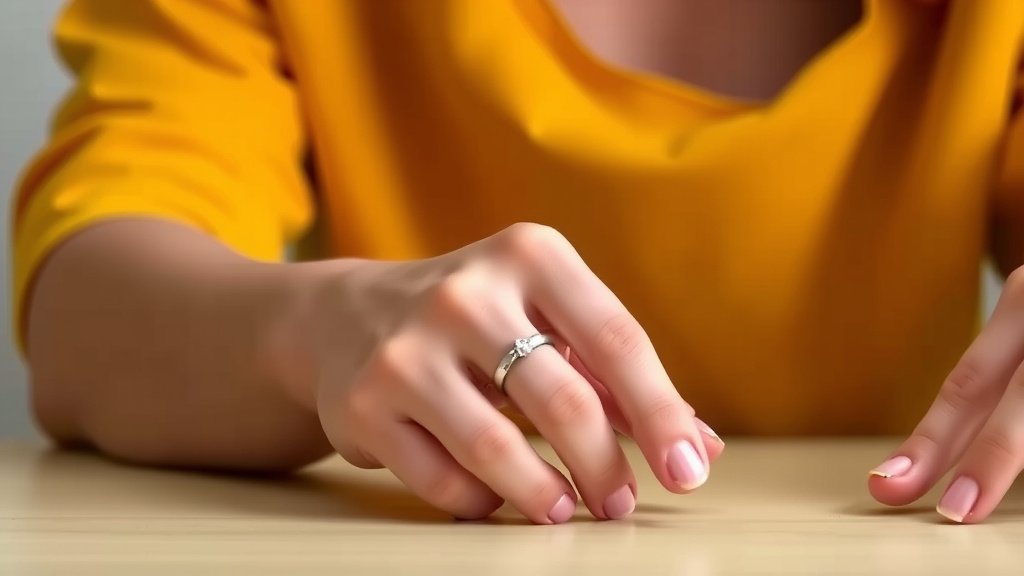
This is the question we see most often. You measure right on the line between a 9 and a 9.5. Which way do you go?
Go smaller. Silicone stretches over time and with body heat. A ring that starts snug loosens into the perfect fit. A ring that starts loose only gets looser. Most sizing guides and ring brands agree on this one.
The one exception: if you have large knuckles and the ring has to pass over them, lean toward the larger size. Comfort beating the knuckle matters more than a snug base.
Common Sizing Mistakes to Avoid
We found that a handful of repeat mistakes cause most sizing regret. Here’s what to watch for:
- Measuring in the morning—your fingers are smallest then, so you’ll undersize
- Pulling the string too tight—it digs in and gives a false, smaller number
- Using stretchy materials—elastic bands and rubber bands distort the measurement
- Skipping the brand’s own chart—sizing isn’t universal across companies
- Guessing based on a friend’s ring—fingers vary more than you’d expect
- Measuring just one time—take two or three readings and average them
Tips for Getting the Most Accurate Measurement
A little technique goes a long way. Follow these and you’ll nail it on the first try:
- Measure the exact finger you’ll wear the ring on—your dominant hand is often slightly larger
- Keep the string level all the way around, not twisted or angled
- Ask someone to help; a second set of eyes catches overlap errors
- Measure at the end of a normal day, not after a workout
- Double-check your number against the chart twice before ordering
What If Your Ring Still Doesn’t Fit?
Don’t panic. Even careful measurers occasionally miss. Most silicone ring brands offer free exchanges or affordable replacement sizes, precisely because sizing at home isn’t foolproof.
Some companies even sell sizing sample kits—a set of practice rings in multiple sizes. You wear them around the house for a day or two, find your winner, then order. If you’re nervous about getting it right, we found this is the single easiest way to remove the guesswork.
And remember: silicone rings are affordable. Ordering two sizes and returning one costs less than a single metal ring repair. Sometimes that’s the smartest shortcut of all.
Conclusion
Sizing a silicone ring comes down to a few simple habits. Measure in the evening with thin string or floss, match your millimeters to the brand’s own chart, and size down half a size since silicone stretches. If you land between sizes, go smaller—unless large knuckles are in the picture. And if it still isn’t right, exchanges and sample kits have your back. We hope this guide saves you from the guesswork most first-time buyers deal with. Your next step? Grab some floss, take two measurements tonight, and check that number against your brand’s chart before you click order. You’ve got this.
Frequently Asked Questions
Can I size a silicone ring for someone else as a gift?
You can, but you’ll need to get creative. Borrow a ring they already wear on the correct finger and trace its inner circle on paper, then measure that circle’s diameter against a chart. If you can’t borrow one, many brands sell gift-friendly sample kits or offer easy post-holiday exchanges.
Do silicone rings stretch out permanently over time?
They stretch slightly with body heat and daily wear, but quality silicone usually returns close to its original shape. We found that most rings soften into your fit within the first week rather than loosening endlessly. If yours becomes noticeably floppy after months of wear, it’s probably time for a replacement.
Should my silicone ring spin on my finger?
A little rotation is normal and nothing to worry about. That said, constant spinning usually means the ring is too loose. A properly sized silicone ring should sit snugly at the base of your finger without leaving deep indentations when you take it off.
Are silicone ring sizes the same as metal ring sizes?
Not exactly. Silicone rings are flexible, so most brands recommend dropping half a size from your metal ring size for the best feel. Because sizing also varies between manufacturers, always double-check the specific brand’s chart before ordering.
Can fingers change size enough to need a new ring?
Absolutely. Weight changes, pregnancy, aging, and even seasonal shifts can alter your finger size over time. We suggest rechecking your measurement every year or two, or whenever your current ring starts feeling too snug or too loose.